Author: joost

Guðriðr Þorbjarnardóttir “The first Norse women to travel to North America”


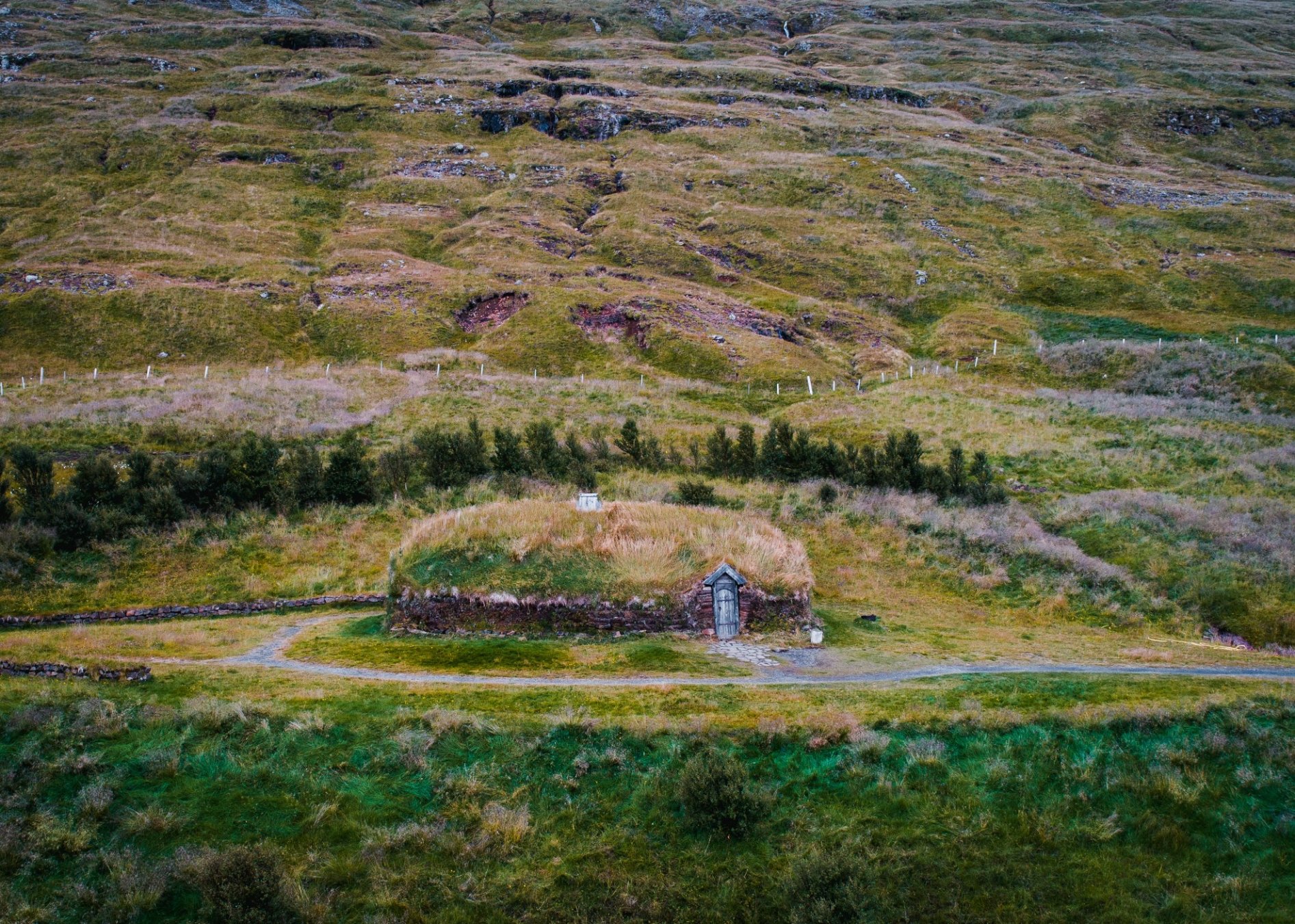
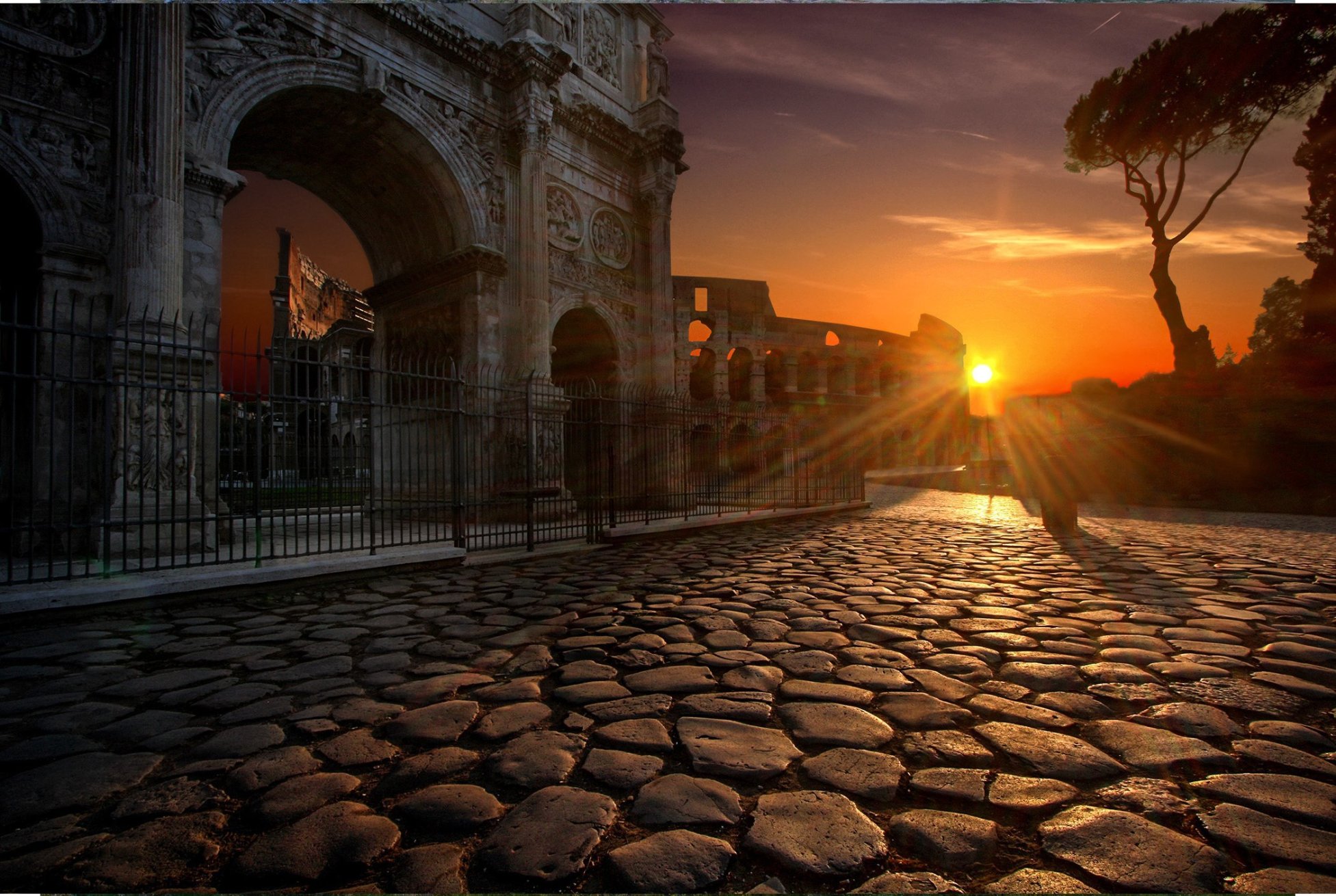
Guðríðr is undoubtedly one of the most interesting female figures of the Viking Period in the Nordic countries. Guðriðr received the nickname “viðförla” (literally far traveled” or “wide-fared”) for having made numerous trips through-out her life that took her from her native Iceland to Greenland, to Vinland in the Americas, to Norway, to Rome …


We know about Guðriðr thanks to well-known Icelanders, some of them bishops, her descends, and because her travels were collected in two sagas: the “Saga of the Greenlanders” and the “Saga of Eirík the Red“). The sagas agree on most facts, although also with some divergence.


Guðriðr was born around 980 A.D. in Laugarbrekka, in Snæfellnæs, Iceland. She was the daughter of Þorbjörn Vifilsson and Hallveig.


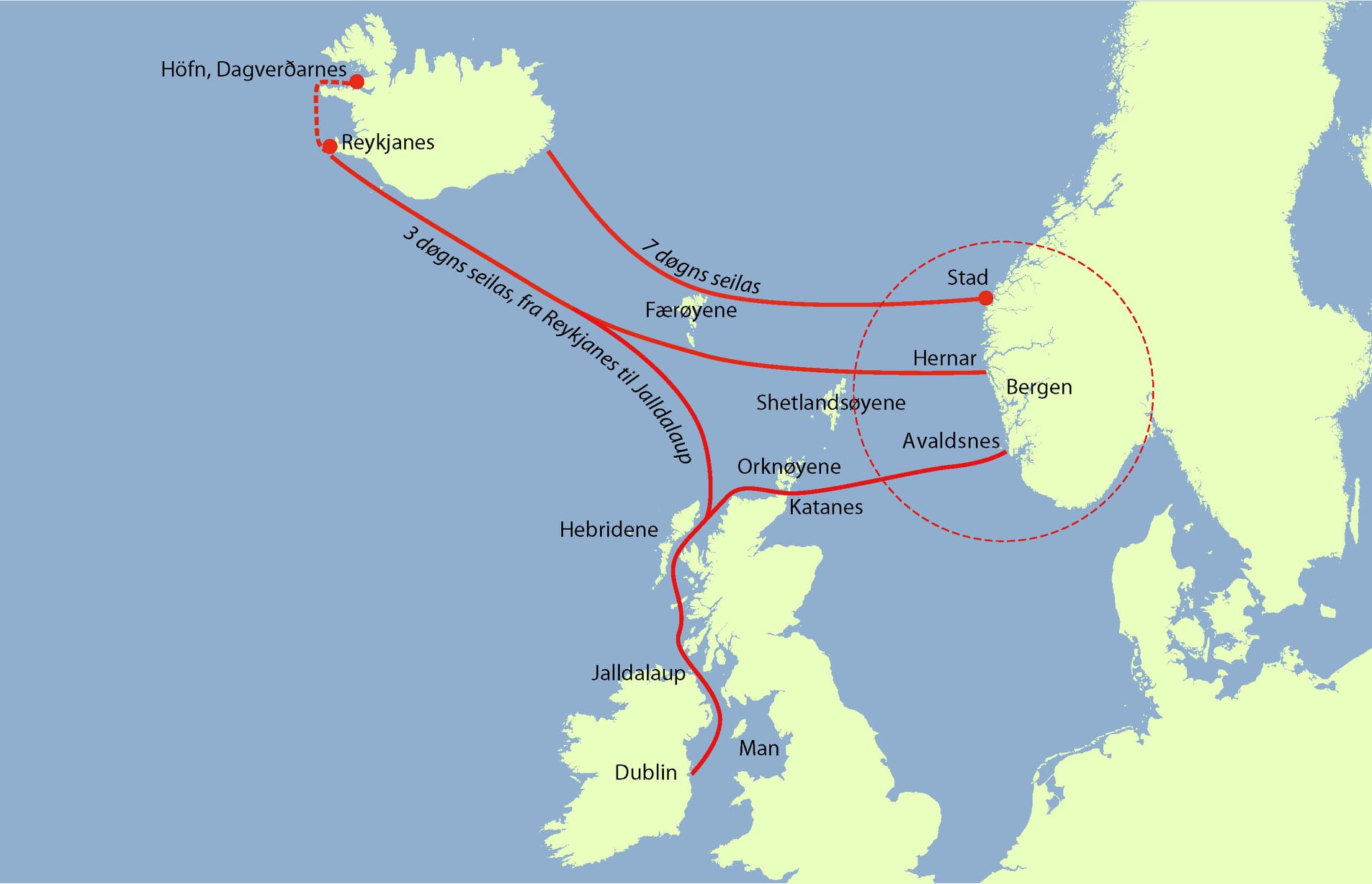
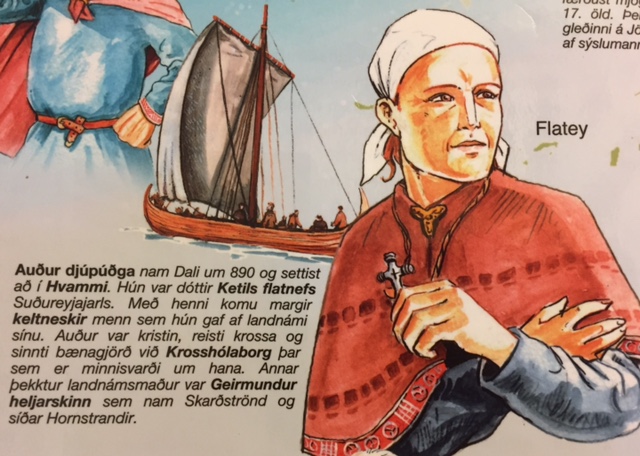
Vifil, Guðríðr’s paternal grandfather, arrived in Iceland as an enslaved person. His master, Auð Ketillsdóttir gave him back his freedom and land. Although himself the son of a slave, Þorbjörn, Guðriðr´s father, did not allow her to marry the chosen, a young man named Einar who was the son of a slave. Perhaps to put land – or rather, the sea- between the lovers, her father sold the family farm in Iceland and emigrated with his family to Greenland. According to the “Saga of Eirík the Red”), Guðríðr accompanied Þorbjörn, her father, when he sold his land and decided to move to Greenland; they had to overcome storms and diseases that killed half the crew. Finally, the ship arrived at Hjerjolfnæs, in the Eirík Fjord, in Greenland, where they were welcomed by a farmer named Þorkel to spend the winter with him.


The “Saga of the Greenlanders” also recorded Guðriðr´s voyage to Greenland. This text, however, tells that Guðriðr was accompanied by her husband, Þórir Austmanni, a merchant of Norwegian origin. The ship in which they were traveling was shipwrecked on some reefs off the coast of Greenland. Fortunately, they were sighted by Leifr Eiríksson returning to Greenland after a trip to Vinland. Leifr picked up a group of fifteen castaways and invited them to bring as many of their belongings as the ship could carry. Leifr Eiríksson took them to Brattahlid and offered hospitality in his house to the couple and three other men; for the rest of the castaways he found lodging. It was from this event that Leifr received the nickname “the Fortunate”.

That winter, the crew of Þórir’s ship was attacked by illness and some of its members died and so did Þórir, Guðriðr’s husband.


We return to the “Saga of Eirík the Red”, which relates that Guðriðr was visiting the house of a farmer named Þorkel, who called a völva, a fortune teller named Þorbjörg. She prepared to perform the magic session, but for this she would need a woman to sing the so-called “Varðlokur” (“Psalm of the Occult); they asked among the people on the farm, but no one knew the song, except Guðriðr.


Then Guðriðr said: “I am neither a connoisseur of magic nor a fortune teller, but in Iceland my adoptive motherHaldis, taught me a song called “Varðlokur”. Þorkel responds, “Well, your knowledge has come to the right place.” And then she answered, “This is an enterprise in which I have no intention of helping you because I am a Christian woman.” Þorbjörg said to her: “It could be that you could help the people her by so doing , and you´d be no worse a woman for that. But I leave it up to Þorkel to procure what is necessary.” Þorkel insisted and she agreed to do as asked.


Then the women formed a circle around the hjalet, the elevated platform on which the völva would be seated while making her predictions. Guðriðr then song the chant beautifully. The völva thanked Guðriðr for the song and said that the spirits had arrived and had liked her singing so well performed: Guðriðr, I want to reward you for the help we have received from you; now I can see your destiny completely clear. You are going to have a very honored marriage here in Greenland, although it will not be long-lasting, because your paths will take you to Iceland and from you will start a great and good lineage and, your offspring will shine such a strong radiance that I am not able to see exactly. May you fare well, now, my child.”

When the weather improved, Þorbjörn prepared his ship and they sailed to Brattahlíð, where Eirík the Red received them with joy and spent winter with him; when spring came, Eirík gave land to Þorbjörn in Stokkanæs, where he built himself a splendid farm and moved there to live.

Later, we are told that Þorstein, son of Eirík the Red, asked Guðríðr in marriage; they celebrated their wedding in Brattahlið. Þorstein owned half of a property called ”Clear Fjord Farm”; the other half belonged to a farmer also named Þorstein and his wife Sigrið.

Þorstein and Guðriðr spent the winter there, but an epidemic disease caused many deaths on the farm. Shortly after Þorstein Eiríksson also died.

This same episode is also recorded in the “Saga of the Greenlanders”, in which it is reported that Guðriðr was grief-stricken sitting in a chair in front of the bench on which Þorstein’s body had been placed. While she was comforted, Þorstein’s body stood up and said, “Where is Guðriðr?”; he said it three times, but Guðriðr remained silent. Then she asked Þorstein the Black, “Should I answer him? or not.” Þorstein the farmer said no. Then he sat in a chair with Guðriðr on his knees and said, “What do you want, namesake?”

Then, after a short pause, the dead man said: “I want to tell Guðriðr her fate, so that she will resign herself to my death, because I have gone to a good resting place. I can tell you Guðriðr, that you will marry an Icelander and that you will have a long life and many descendants, promising, bright and magnificent, sweet and very friendly. You will leave Greenland for Norway and from there to Iceland, where you will make your home. There you will live a long time and you will outlive your husband. You will travel abroad; you will go south on pilgrimage and return to Iceland to your farm, where a church will be built. There you will stay and take holy orders and die there.”

After this, Þorstein fell backward and his body was prepared. When spring came,Guðriðr returned to the Eirík Fjord carrying the bodies of Þorstein and the others who had died and the clerics officiated the ceremonies to receive Christian burial.

As we can see, the prophecy that Þorstein made about the future of Guðriðr was very similar to that which she received from the völva Þorbjörg in the “Saga of Eirík the Red”.

Guðriðr was invited to stay with Eirík the Red.

One autumn a wealthy Icelandic merchant named Þorfinnr Karlsefni Þordarsson arrived in Greenland; he came from Norway and was a man of a good family and a merchant with a good reputation, possessing a considerable fortune.

Þorfinnr commanded two ships loaded with goods and with a crew of about forty men. Eirík the Red invited Þorfinn and his men to the Christmas feasts; shortly afterward, Þorfinnr, in the presence of Eirík, asked Guðriðr to marry him.

Discussions about trips to Vinland must have been a recurring topic of conversation on the long winter nights. Some, including his own wife Guðriðr, urged Þorfinnr to make the journey. Once determined Þorfinnr hired a crew of sixty men and five women.

During the winter, Þorfinnr prepared an expedition to Vinland accompanied by two other ships; in total, a crew of about one hundred and sixty people.

When they left, they took with them all kinds of cattle, since, if possible, the intention was to settle in those lands. And Guðriðr accompanied her husband on the expedition; the couple sailed west to reach Vinland with their crew. When they arrived, they settled in the houses Leifr had built. There was born their son Snorri, the first European child born in America. They explored the lands further south and reached places that had not been reached by the expeditions that preceded them; they arrived at a place they called Hóp, which according to a climate specialist could be the island of Manhattan, where New York is now located. Guðriðr and Þhorfinnr spent three years on the American continent.

The colonization project failed and after fighting several battles against the native Indians,

Þorfinnr stated that he did not want to stay any longer in Vinland and wished to return to Greenland.

They prepared for the return trip and loaded the ship with many of the country’s products, including

grapes, berries, and skins. When spring came, they made the return journey without incident and

arrived in Eiríksfjord, in Greenland, where they stayed for the winter. Next, they travelled to Norway,

where they lived one winter and returned to Iceland. Here they settled in Glaumbær, where Þorfinnr

and Guðriðr had a son named Þorbjörn.

After Þorfinnr’s death, Guðriðr took over the management of the property together with her son Snorri, who had been born in Vinland. When Snorri married, Guðriðr undertook a journey abroad and made a pilgrimage south – probably to Rome – and then returned to her son Snorri’s farm. Meanwhile, he had a church built in Glaumbær. Afterwards, Guðriðr became a nun and stayed there for the rest of her days.


Snorri Þhorfinnsson, Guðriðr’s son in America, had a daughter whom he named Hallfrid and a son he

named Thorgeir. Hallfrid was the mother of Thorlak, Bishop of Skállholt in southern Iceland; Thorgeir

was Ingvild’s father, the mother of the first Bishop Brand; and Björn Gilsson, one of the descendants

of her son Þorbjörn, he was also bishop of Hólar.

This exceptional woman, intelligent, respected, and recognized by her contemporaries, had a long

and intense life. She made long and exhausting journeys, at times dangerous, reaching places so far

away that very few people in her time had reach.
 

MELKORKA

A SLAVE WOMAN OF THE VIKING AGE

Slavery was an inescapable fact of the ancient world. The Viking Age was certainly no exception, with raiders and merchants co-operating to run a lucrative, insatiable slave trade. Captives of both sexes and all ages were valued in the marketplace, but unfortunate young women seem to have found themselves in particular demand. The grim fate of those caught up in one violent raid was vividly described by the 11th century Norwegian poet, Valgarðr:

fair women were captured.

A lock secured the girl’s body;

many a maiden went…to the warships;

bright fetters bit greedily into the flesh.

But what happened to such victims after they were taken? There are no written records from the captive women themselves, but some of their stories were passed down orally through many generations. Eventually, they were transcribed in the medieval Icelandic family sagas, which claim to tell of genuine events that occurred in the centuries after the Norse settlement of Iceland.

One of the surviving stories concerns the strange twists and turns of fate that affected a woman of the 10th century. It is told as a sideline to the main plot in Laxdaela Saga, which was written anonymously some 300 years later. The saga introduces our subject as a young captive at a slave market, which formed part of the festivities around a convention of the Scandinavian kings. This was a major event, with huge crowds of followers and hangers-on milling around booths in the assembly grounds.

In one of these booths, behind a dividing curtain, twelve wretched women were sitting in a row. They were waiting to be sold by their ‘owner’, a wealthy merchant known as Gilli the Russian. This particular young woman sat silently at the end, dressed in shabby clothes. Suddenly, the curtain was pulled aside, and Gilli led another man into the inner chamber. The stranger was a well-to-do Icelandic landowner called Hoskuld Dala-Kolsson. The shabbily-dressed woman soon found him ogling her, and heard Hoskuld enquiring, in the words of the saga:
‘What’s the price of that woman?’

Gilli replied, ‘Three silver pieces is what you must weigh me out for her.’

‘It seems to me that you charge very highly for this particular slave woman,’ said Hoskuld. ‘That’s the normal price for three.’

Gilli said, ‘You’re right, I consider her to be worth much more than the others.’

Gilli gave no hint of why he considered her so valuable, and even admitted frankly that she had a disability. He was, she said, a deaf-mute, for she had never spoken a single word to him. Perversely, both the high price and the problem stimulated Hoskuld’s eagerness to purchase her. He took out his purse at once, handed over the full amount of silver and took the slave-woman straight back to his own booth. That night, the saga says blandly, he slept with her – a euphemism for what, from her point of view, could only have been rape. The next morning, he assuaged his conscience by dressing her up in splendid clothes to parade her about as he conducted his business errands. When he had finished, the young woman found herself forced onto a ship with him, bound for Iceland.

After they arrived, she quickly found relief from Hoskuld’s sexual attentions – for his wife, Jorunn, was obviously not at all pleased to meet her. However, Jorunn pitied the slave-woman’s disability and grudgingly allowed her to share their house. Hoskuld had to give up his physical relations with her, but it was too late to prevent the consequences of his assault. For a few months later, the young woman gave birth to a baby boy. Hoskuld adored his illegitimate son, and named him Olaf. However, the jealous Jorunn made it plain that, if the young mother hoped to stay in their household, she must now work for them to earn her keep.

Young Olaf was a sturdy, good looking and very precocious lad. One morning when he was two, he was chattering away to his mother outside when Hoskuld suddenly appeared. Too late, the young woman realised that Hoskuld had overheard her talking back animatedly to the child – and thus finally discovered that her apparent deafness and dumbness was merely a deceit.

Then Hoskuld went to her and asked her name, and said it was useless for her to hide it any longer.
She said so it should be, and they sat down on the edge of the field. Then she said, ‘If you want to know my name, I am called Melkorka.’

Hoskuld bade her tell him of her kindred.

She answered, ‘The name of my father is Myrkjartan. He is a king in Ireland. I was taken a prisoner of war from there when I was fifteen winters old.’

This claim of royal blood infuriated the resentful Jorunn even more. That evening, as Melkorka helped her undress for bed, Jorunn started attacking Melkorka – who fought back even more violently, until Hoskuld separated them.

Melkorka’s revelation, and the fight, turned out to be a turning point in her fortunes. For Hoskuld sent her right away to live in a farm of her own with their son, supplying everything she needed there. Thus her life was transformed for a second time. She had gone from being a princess, to a nameless slave-woman, and now finally to an independent farm manager.

But that was not the end of her story. Olaf grew from a promising boy to an outstanding young man who was “far superior to other men, both on account of his beauty and courtesy”, according to the saga. He was fostered by a local goði (priest-chieftain), who made him his sole heir. (Fostering while the parents were still alive was considered an honour in the Viking Age, and a way of extending one’s kinship bonds). Hoskuld now neglected Melkorka. So she seized the opportunity to marry another farmer, who was willing to fund a voyage to Ireland for Olaf to meet his royal kinsmen there.

Olaf’s trip was a great success. En route, he visited Norway, where he gained favour with King Harald Grey Coat and his powerful mother, Queen Gunnhild. The latter provided him with a ship and crew, enabling him to arrive in Ireland in style. There, he presented King Myrkjartan with a gold ring that the king himself had once given the young Melkorka – proof that his abducted daughter had survived, and that Olaf was none other than his grandson. Overjoyed, he offered to make Olaf sole heir of his kingdom – though Olaf pragmatically declined.

By the time Melkorka saw her son again, he was wealthy in his own right, with their shared royal lineage proven beyond doubt. She lived to see him make a good marriage, and to inherit his foster-father’s farm. Known as Olaf the Peacock, he later became an important character in the dramatic events that subsequently unfolded in Laxdaela Saga.

THE DARK SKINNED VIKING!

The true story of Geirmund Heljarskinn, A man who breaks the sterotype of the Viking Age.

Text Marit Synnøve Vea

Hjor is called Hjør in Norvegian, and Hjorr in Old Norse, a word that means sword. Hjor and Ljufvina reigned as king and queen at Avaldsnes when Harald Fairhair came to power. Hjor was the last of the kings at Avaldsnes who descended from the Augvald dynasty.

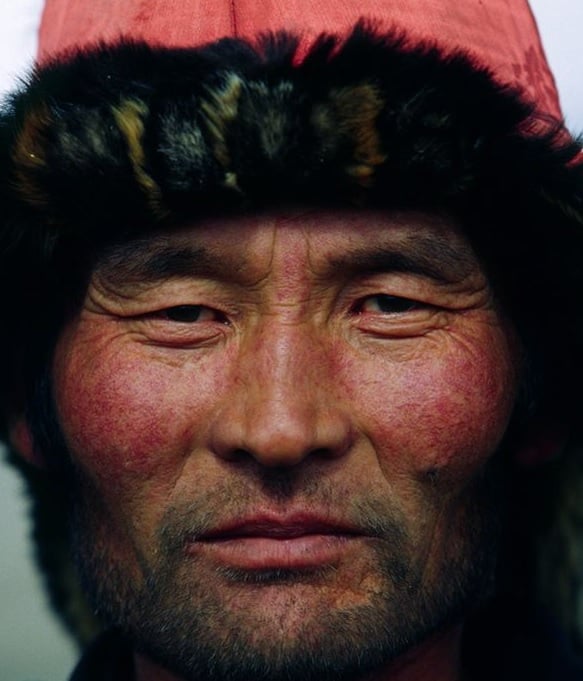
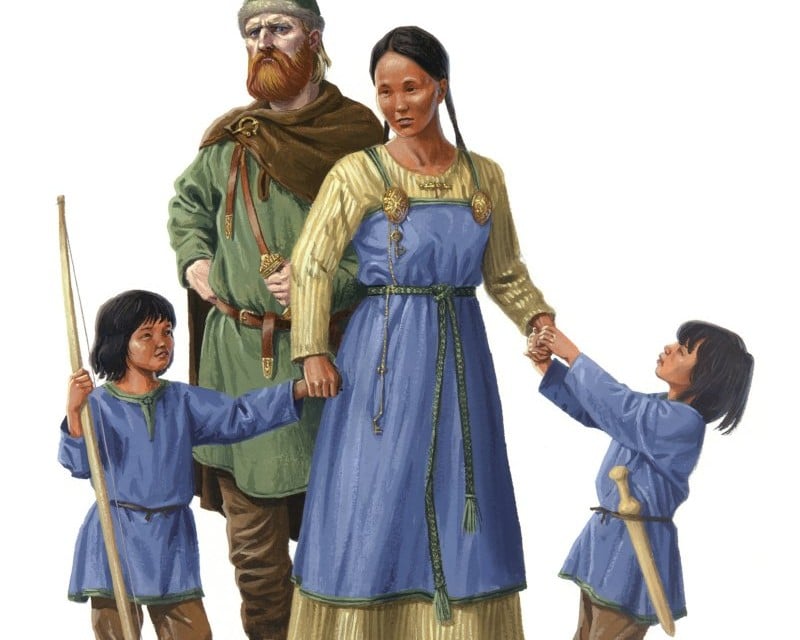
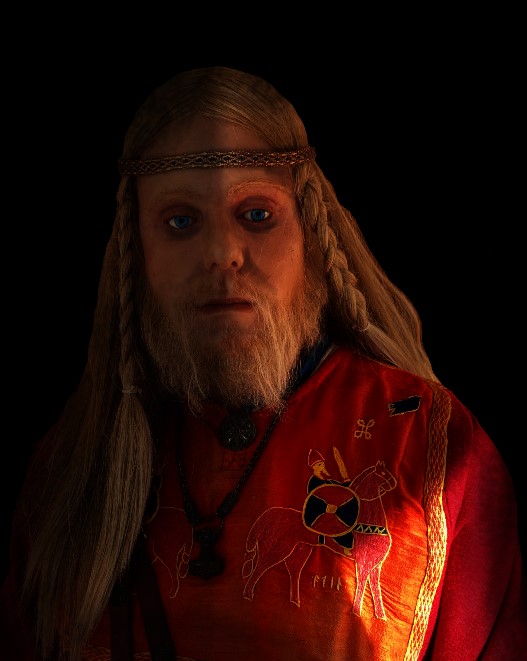
His wife Ljufvina was a princess of Mongolian descent and despite her dark skin and unusual looks, she reigned as queen over the Norsemen at Karmsundet.

Hjor and Ljufvina had two sons: the twins Hamund (Håmund) and Geirmund. They, too, had dark skin and were therefore nicknamed Heljarskinn; the “Black-Skinned”.

Geirmund the Black-Skinned – the black Viking – never became king at Avaldsnes. But in old sources he is called a sea-king who became an ally of the Dublin kings before crossing the sea to Iceland and earning himself a reputation as “the greatest of all settlers in Iceland”.

Hjor’s dynasty – the kings who controlled Nordvegen – the “Northern Way”

King Hjor belonged to Western Norway’s leading royal dynasty, and as a descendant of Augvald, he could trace his family roots back to divine beings. Hjor’s father was the Viking hero King Halv, who became famous during his lifetime.

The power of the Avaldsnes kings stemmed from their control of trade and ships along the “Nordvegen” fairway. According to the saga, the kings of Avaldsnes travelled far and wide themselves and we are told that even Hjor’s grandfather, Hjorleif the Woman-Lover, travelled to Bjarmeland in Siberia.

King Hjor goes to Bjarmeland to hunt for walruses and finds his queen. Hjor knew about Bjarmeland and the natural resources that were to be found in this country far to the north, where the walrus represented the greatest source of riches. Due to excessive hunting, the walrus became extinct in Nordvegen. But demand continued to increase. Apart from oil and the valuable tusks (“the ivory of the North”), the Vikings needed walrus hides to make the rigging for their ships, which were increasing in size and number.

Hjor sailed to Bjarmeland to look for walruses, and here he finds the Bjarmeland princess who was to become his queen and the mother of his heirs.

Ljufvina’s background

Ljufvina came from the Sikhirtya tribe, a Mongolian people belonging to the indigenous populations of Siberia. They lived by the coast, along the eastern border of an area that the Norseman called “Bjarmeland”.

The Sikhirtya made a living from catching marine mammals and were highly skilled walrus hunters. Their dark skin and language distinguished them from other Samoyed peoples. Russian excavations have revealed that an advanced maritime culture existed in Northern Siberia.

16th century writings tell us that there were two types of Samoyed. The Sikhirtya people are described as “the other, black Samoyeds”. The word Sikhirtya comes from the language of the Nenets and means “people with a black face/appearance”. The Sikhirtya people have now been assimilated into the Nenet culture.

Samojedkvinner. Frå Nansen sin ekspedisjon til Sibir tidleg på 1900-talet. Nansen skriv at nokre av dei mørke samojedane han møtte minna om kinesarar av utsjånad.

Hjor and Ljufvina’s marriage

The marriage between Hjor and Ljufvina was arranged as an alliance in order to keep control of the walrus trade.

In the Viking era, marriage was a family matter whose purpose was to create advantageous alliances and connections of a practical, economic or political nature. Love was not something that was taken into account when marriage alliances were entered into. Nevertheless, people did find love – both within and outside marriage.

Ljufvina, a dark-skinned queen at Avaldsnes

Ljufvina left her family, home and people behind and arrived in an alien culture. According to the saga, her husband Hjor was often away on his travels.

What was Ljufvina’s life like as a foreign, dark-skinned woman at Avaldsnes? Did she bring some of her own people with her? Her name, Ljufvina, means “the friendly lady”.

Ljufvina exchanged her twin sons for the son of a slave

Ljufvina gave birth to twins in about 850, while Hjor was away at a meeting with kings. Geirmund and Hamund resembled their mother. They are described as “ugly, dark and hulking”.

Ljufvina exchanged her twin sons for the blond son of a slave, Leif, and told Hjor that Leif was his son. Why did she do such a thing? Was she afraid that Hjor would be disappointed and would not accept the twins as his heirs because of their Mongolian looks? Did she want to safeguard her own position?

When the boys reached the age of three, the bard Brage the Old revealed the truth about the twins. He recognised “royal” characteristics in the boys: they were “clever with words”, had leadership qualities and demanded that justice be done.

Nenetsarar framføre teltet. Likna Geirmund og Håmund desse barna vi ser her? Nenets in front of the tent. Did Geirmund and Håmund look like the children we see here? (Foto: Frå Nansen si bok: Gjennom Sibir)

Two are inside here,

I trust well both, Hamund and Geirmund, Hjor’s own offspring. But Leif the third, The son of Lodhott, Rear him not Queen, Few will prove worse

Ljufvina then told about the exchange. Hjor was allowed to see his real sons and called them heljarskinn “Black-Skinned”. So, the boys won their rightful status as the king’s sons after all.

In the Tale of Geirmund Heljarskinn in Sturlungusaga we can read this about this incident:

The queen gets up now and goes off with the boys and swaps them back with the bondswoman. The truth is now apparent to the queen: that they’ve become more promising lads than they seem, as they had every right to be. And in the evening, when the king came home and had sat down in his throne, she goes before him, taking the boys with her and tells him the whole story, and how she’d made a deal with the bondswoman, and begs him not to be angry.

The king looked at the boys and said, “I’m pretty sure these boys are of my kin, but I’ve never before seen such deathlike skin as these boys have on them.” And that’s why they were called (*1)Deathskin.

And as soon as they were in their prime, they put to sea and set out raiding and soon won both wealth and fame, and for a long time they captained a great fleet, according to what it says in some reports, and there’s some mention in the latter part of the Saga of Rook the Black of how those brothers were reckoned to be the greatest warriors of all the sea-kings at that time.

What did Hjor and Ljufvina feel for each other?

Perhaps they did eventually come to love each other? There are signs that they did: we learn that Hjor did not take any other wives than Ljufvina, unlike the practice of many other kings in the time of the Vikings. Neither are there any reports of him having children with any other women than Ljufvina.

Ljufvina’s sons are dark-skinned and resemble their mother. There is nothing to suggest that they inherited anything of their father’s appearance. In spite of this, Hjor trusted Ljufvina. He accepted the dark-skinned twins as his own sons and heirs.

We do not know what happened to Hjor and Ljufvina when Harald Fairhair settled at Avaldsnes. But we know more about what happened to their two sons, particularly Geirmund the Black-Skinned.

Geirmund the Black-Skinned – the black Viking

Written sources call Geirmund a seafaring king. He was away when Harald Fairhair ousted Hjor and Ljufvina from power. Perhaps he was on an expedition to Iceland when the Battle of Hafrsfjord took place? Or perhaps he was on a trade mission to Bjarmeland?

When Geirmund returned home, he learnt that Harald Fairhair had taken control of Nordvegen. He could not therefore go to the family farm at Avaldsnes and claim his allodial rights and his royal throne – at least, not yet. Instead, he sailed to Ireland and sought his fortune further west

Geirmund the Black-Skinned in Ireland

Geirmund is known as the most renowned Viking of the West. Archaeological finds reveal that the county of Rogaland was the area of Scandinavia with the closest contacts with Dublin during the 9th century. King Hjor had already forged contacts with the power elite in Ireland and Geirmund therefore had many friends and allies there. Amongst them were his twin brother Hamund and Ulf the Squint-Eyed.

Harald Fairhair had taken control of the trade in the North and in Bjarmeland. The Dublin kings needed walruses and seals for their large fleet of ships. The Dublin kings therefore had to find these resources elsewhere or submit to Harald.

Geirmund’s journeys to Ireland and Iceland

Geirmund knew that walruses could also be found on a newly discovered island in the North Atlantic: Iceland. He joined forces with the Dublin kings and provided them with ropes, oil and tusks from Iceland. In return, he was given slaves. For Geirmund needed workers, not gold, on this newfound island of resources.

Geirmund the Black-Skinned in Iceland

Geirmund is called the greatest of all settlers in Iceland. He left Ireland with a large number of people, of whom several came from Rogaland and became major players in the so-called “Realm of Geirmund”. Geirmund also took many slaves from Ireland with him to Iceland.

Geirmund’s realm was located at Briedafjord in the West and Northwest of Iceland. It is said that he rode between his farms accompanied by 80 men. In comparison, Harald Fairhair only had an entourage of 60 men in times of peace.

Geirmundveldet på Island

Geirmund’s power depended on walrus hunting. Geirmund had learned how to process and use walrus products from his relatives in Bjarmeland. Perhaps some of them accompanied him on his travels to Ireland and Iceland. (The text is based on the book “The Black Viking” and old scriptures obtained by scientist and author Bergsveinn Birgisson)

(Bergsveinn Birgisson uses the genalogy found in Landnamabok (Book of Settlement) where Hjor, married to Ljufvina, is the son of King Half. Others, like P.A. Munch,suggests that Hjor, married to Ljufvina, is the grandson of king Halv. He believes that two persons with the name Hjor have become one, and that two generations are lost in the genealogy. P.A. Munch explains this by pointing out that in the Saga of King Halv and his heroes Hjor Halvsson is married to Hagny, daughter of Hake Håmundsson. According to P.A. Munch the genealogical line from King Half to Geirmund Heljarskinn will be as follows: Hafv – Hjor Halfsson married to Hagny – Flein Hjorsson – Half Fleinsson married to Ljufvina – Geirmund Heljarskinn.)

THE SEAT OF POWER

Avaldsnes, King Harald ‘Finehair’s Royal seat’ By Geir Sør-Reime

“Most countries have names linked to their territory or ethnic groups, but unlike them, Norway derives its name from the sailing lane along the coast: when people came sailing along the unsheltered stretch from Lista via Jæren northwards, the Karmsund lay as a sheltered sea route towards the north. To the people that lived before us, this was the Norðvegr – the Norway – the Way North.
This strategic location by this important sailing lane made Avaldsnes a centre of power for more than 3000 years. Here, the Avaldsnes princes controlled the coastal traffic up and down the Norwegian coast, and from here, they sent their own ships across the North Sea”.

Avaldsnes was in many ways the outermost border of ‘civilised’ Europe. We know that the princes that had Avaldsnes as their residence adopted Roman habits during the Roman period. The Karmsund is difficult to transverse without motor power due to strong currents and sailing ships had to wait for the currents to turn before they could proceed. At Salhus just north of Avaldsnes, the currents from north and south meet and in practice creates a barrier when the tidal waters collide there. The alternative route along the western coast of the island of Karmøy is very difficult for rowing and sailing boats to cross due to heavy seas and an abundance of small islands and skerries.
This situation created the preconditions for a mighty seat of power at Avaldsnes, especially since the ships were forced to wait for the tide to turn before they could continue through the sound. Many therefore choose to unload their cargo at Avaldsnes, others paid fees/tolls to be able to wait in peace for the tide to turn. In any case, large fortunes were created at Avaldsnes, and that was an important factor when Harald ‘Fairhair’ (born ca. 850 and died AD 931/32), the first king of Norway, choose Avaldsnes as his main residence after his victory over an alliance of Norwegian and Swedish petty kings in Hafrsfjord in AD 872. The reason was simple: Avaldsnes was the centre of Norway.
It was also quite natural for the Hanse League when it wanted to establish trade relations with Norway and its stockfish that they originally choose Avaldsnes as their base and exchanged their goods with stockfish there. Unfortunately (for Avaldsnes), a conflict with the Norwegian king made the Hanse destroy and burn down the Royal Manor at Avaldsnes, and subsequently, they moved their base to Bergen, where they could trade directly with the ships bringing the stockfish from northern Norway.

Burial mounds
The Karmsund still is and has from time immemorial been the gateway to Norway for people arriving from the south, and the gateway to Europe for people coming from the north. The lively traffic through the sound also led to the erection of impressive monuments along the sound, monuments that could be seen by the travellers and remind them of past events. From the Bronze Age to the Viking Age, several majestic burial mounds were erected along the sound, and in addition, the monumental church at Avaldsnes was also placed in close proximity to the sound. In front of the Avaldsnes church, there was a gigantic burial mound called Flagghaugen (the mound with a flagpole) with one of the richest burials from the Roman period in Norway. The so-called Flagghaug Prince was buried together with a wealth of quite unique grave goods.
In fact, the Flagghaug was the site of the first scientific excavation in Norway, excavated between 1834-35 and inside the mound, there was a central burial from around AD 400 with an oak cast, sword, lance, spear, a massive golden arm ring, a silver finger ring, game pieces of glass, a bronze mirror, silver vessels and dishes, silver drinking cups, silver fittings for drinking horns and a bronze wine strainer, a must for wine drinking in those days. The mound also contained two secondary burials with large bronze vessels containing cremated burials.

‘Skrattaskjær
The old Sagas along with the archaeological evidence are the most important sources for our understanding of the Viking Age. The Sagas are Norwegian and Icelandic stories from Medieval times, and they tell stories about kings, families, and the gods.
Just outside of harbour area of Avaldsnes is the skerry ‘Skrattaskjær’, where, according to the Saga of the Norse kings, collected, compiled, and written down by the Icelander Snorri Sturlasson, king Olav Tryggvason, allegedly a grandson of Harald ‘Fairhair’ drowned a group of sorcerers. The Saga says that during Easter AD 997 or 998, a ship full of sorcerers and magicians came to Avaldsnes. They wanted to cast spell on Olav, and conjured up a thick, black mist, but the mist instead of hitting Olav, turned on the sorcerers, who then wandered helplessly around, blinded. Olav caught them and tied them to the skerry at low tide. When the tide came in, the sorcerers drowned. The skerry was then named Skrattaskjær (Sorcerer skerry/rock).

The Royal manor
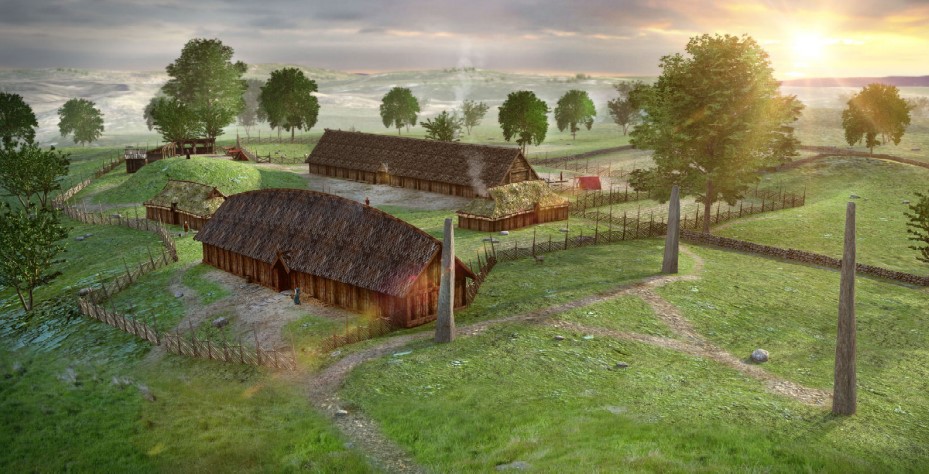
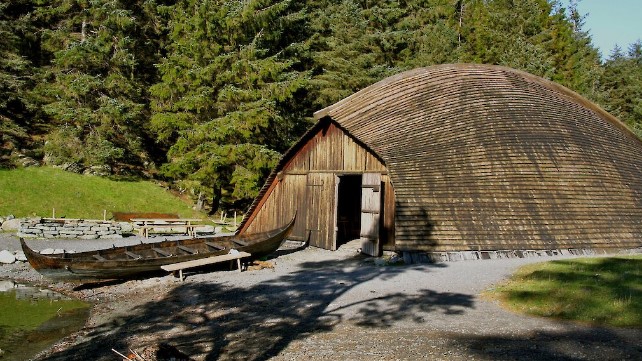
The ruins of the royal manor were uncovered by archaeologists in 2017. The ruins can now be seen just south of the church. The building of the large hall was started by king Håkon Håkonsson and completed under king Håkon V Magnusson around AD 1300. The manor ruins are

currently being conserved. Avaldsnes is best known as the royal seat of king Harald ‘Fairhair’ and his successors up to the reformation in 1537. But when king Harald choose Avaldsnes as his primary residence, Avaldsnes had already been a royal estate for centuries.
The princes or kings at Avaldsnes are known both from the old sagas and from several rich archaeological finds. All kings we know of before Harald were so-called sea-kings. The first sea-king we know the name of is Augvald and lived during the 7th century. King Harald ‘Fairhair’ also started his career as a sea-king, but during his long reign he also managed to become a land-king. He became the founder of the Norwegian royal dynasty, and subsequent kings always tried to prove their ancestry to him. Avaldsnes is called the oldest royal seat in Norway as king Harald ‘Fairhair’ made it his

main residence after the battle of Hafrsfjord in AD 872. His victory there is still the symbol of the unification of the many petty kingdoms into one unified state, albeit his victory was only the start of the unification process, which was more or less completed by the 13th century.

Final resting place
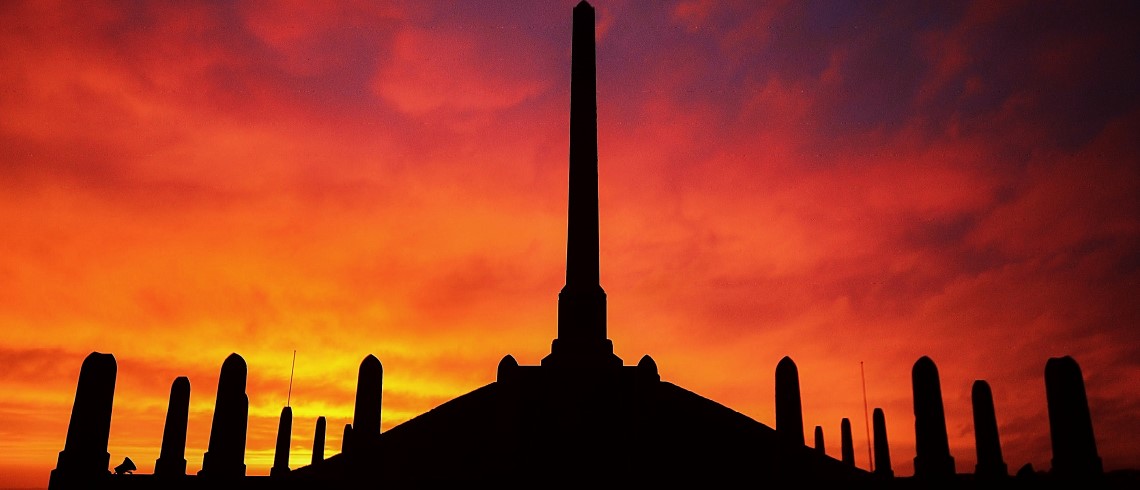
Based on the description of the Icelandic saga writer Snorri Sturlason in his Sagas of the Norse Kings, Harald’s grave was thought to be in the mound that the millennium monument was erected on top of. Snorri had personally been to the area and to Avaldsnes itself and made detailed descriptions of both places in the Saga of Harald ‘Fairhair’. Even though Snorri has a detailed description of the mound, it is uncertain if the Millennium Monument was erected on what really is the grave of king Harald ‘Fairhair’. Both the size of the mound and in fact also Snorri’s description of the grave itself indicated a Bronze Age mound rather than a Viking Age one. Three mounds on the Karmøy side of the Sound have also been suggested as burial mounds of king Harald, but recent dendrochronological and radiocarbon dating of objects from these seem to indicate that they were erected for princes or kings that lived long before king Harald ‘Fairhair’.
Nonetheless, Harald’s Mound has since 1872 been the concrete manifestation of one of the most important events in Norway, and we are now commemorating the 1150th anniversary of the idea that the whole of the ‘North Way’ should be one, unitary kingdom. The idea for this, king Harald ‘Fairhair’ probably imported from Anglo-Saxon England. All of the ‘civilised’ and gradually Christian Europe adopted the Roman organisation of the Empire into provinces. The introduction of Christianity and the consolidation of Papal power, the Church became a sort of Empire with Church provinces ruled by archbishops. The Church provinces were mirrored by temporal authorities ruled by Kings that guaranteed the safety and status of the Church.
We should also remember that king Harald ‘Fairhair’ sent his youngest son, Håkon, later known as Håkon the Good, to the English royal court to learn how to rule a country, and he returned to Norway as a

converted Christian. Håkon’s attempts of Christianisation of Norway had some initial success, and he won a decisive battle over the sons of his older brother Eirik Bloodaxe (once king of Norway and also the last Viking ruler of Jorvik, England) at Reheia (or Blodheia, Blood Hill) on Karmøu, not far from Avaldsnes, in AD 953. There are many more stories from the Viking age in and around Avaldsnes. A focal point for a visit to the area is the Avaldsnes Nordvegen Histoiresenter.

https://avaldsnes.info/

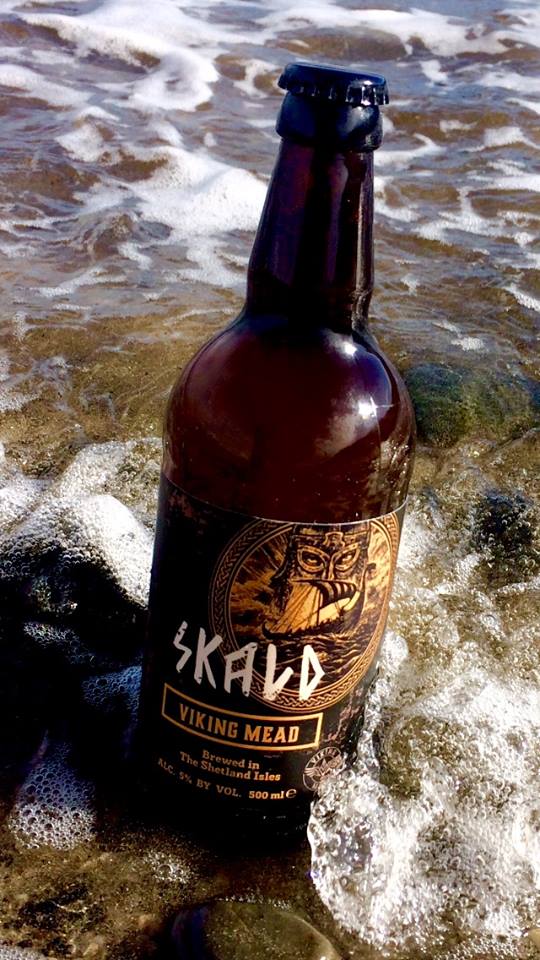
Nectar of the Gods: Recreating Shetland’s Viking Age Mead

Alistair Morgan, owner of Viking Mead Ltd, discusses magical sticks and the science of creating the sweet taste of mead

It’s early September and at eight o’clock in the evening the sun is still high in the sky. at a latitude of 60 degrees north, Shetland enjoys sunlight in the summer months that stretches on late into the evening. It’s the perfect time to take a walk out into the hills of my farm at Burwick to gather some of the vibrant purple heather that is now in full bloom.

After gathering the heather and walking back down the hill, looking out over the various islands on Shetland’s west coast, it is easy to imagine the Vikings that settled these islands hundreds of years ago making a similar pilgrimage to gather the ingredients for their brewing.

Looking around I can see the remains of ancient stone settlements dotted across the landscape, including the remains of a broch on the southernmost tip of Burwick which gives the place its name (Burwick means broch bay, from the Old Norse borg and vík).

Living on these remote islands, I am inspired by the resourcefulness and self-reliance of the people who came before. That is what started me on my journey to create Viking Mead. Shetland’s Viking heritage is rich, you can see signs of their influence everywhere you go on these islands and, after brewing as a hobby for some time, I wanted to know more about how our Viking predecessors might have done it.

I am by no means an academic expert on the ancient origins of mead, however I have heard an interesting and “common sense” theory about the possible origins of mead, which seem quite plausible to me, at the very least it does make for an interesting story.

In the times before domestic beekeeping, the only way to get honey was to harvest it from wild hives. This of course presented the challenge of getting to the honey without getting stung by many angry bees. A possible solution to this was to take the hive and submerge it in a vat of water, thus drowning the bees and allowing easier access to the honey. During this process some of the honey would have dissolved in the water and if the vat was then left undisturbed, wild yeast present in the environment would then begin to convert the sugars from the honey into alcohol and carbon dioxide. the vat would start to bubble and fizz and become increasingly alcoholic, and of course if you had no concept of microscopic life, you might maturally assume that this was the result of magic or a gift from the gods!

As time went on, and this process was repreated and refinements were made, different botanicals and flavours were added as part of the process and the vats of honey water were stirred with a stick in order to mix in the honey. Colonies of yeast made themselves at home on the surface of these sticks and when they were used for stirring other vats, the yeast would start to do its work and the process would begin again. These became “magic sticks” and were passed down from one generation to the next as family heirlooms, and to this day still exist in parts of Scandinavia. Despite the advances in our knowledge and brewing techniques, there is something magical about taking honey, water and yeast and turning it into delicious mead.

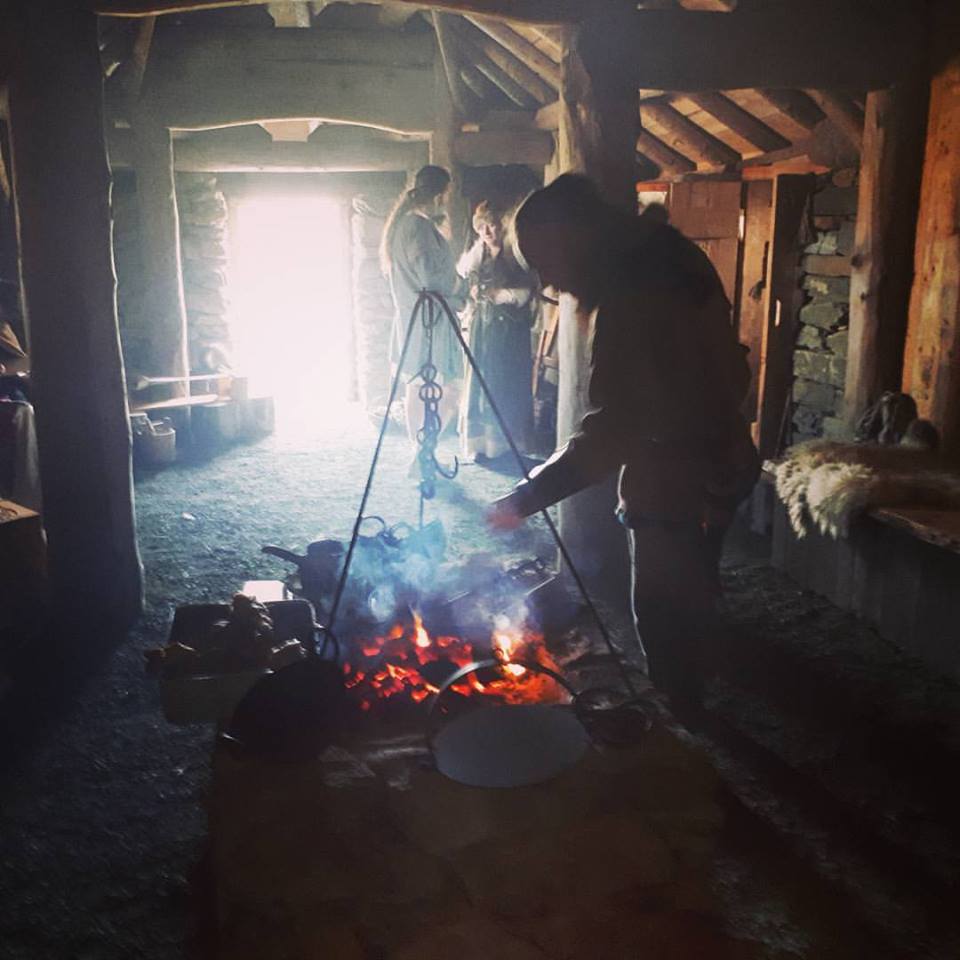
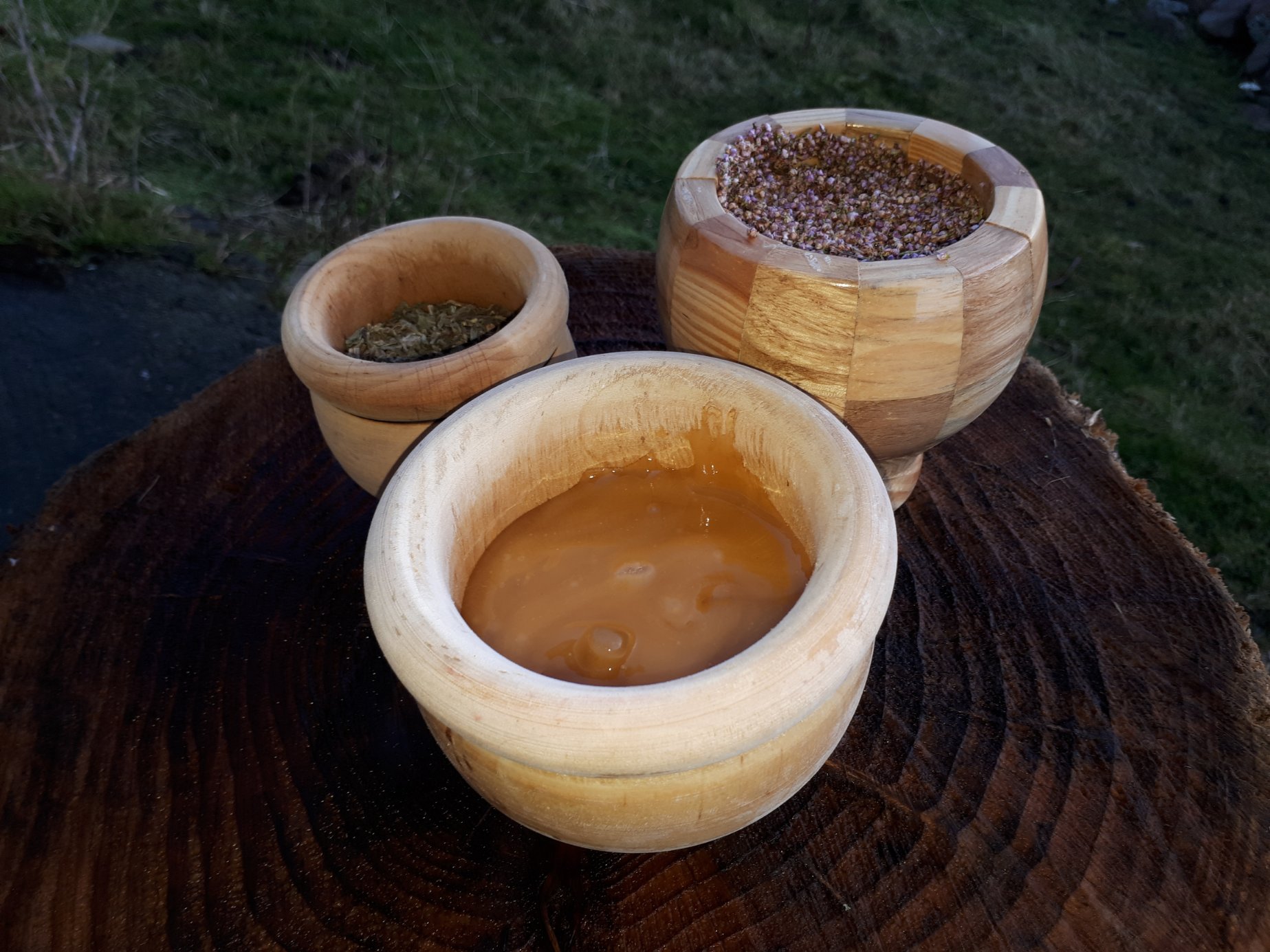
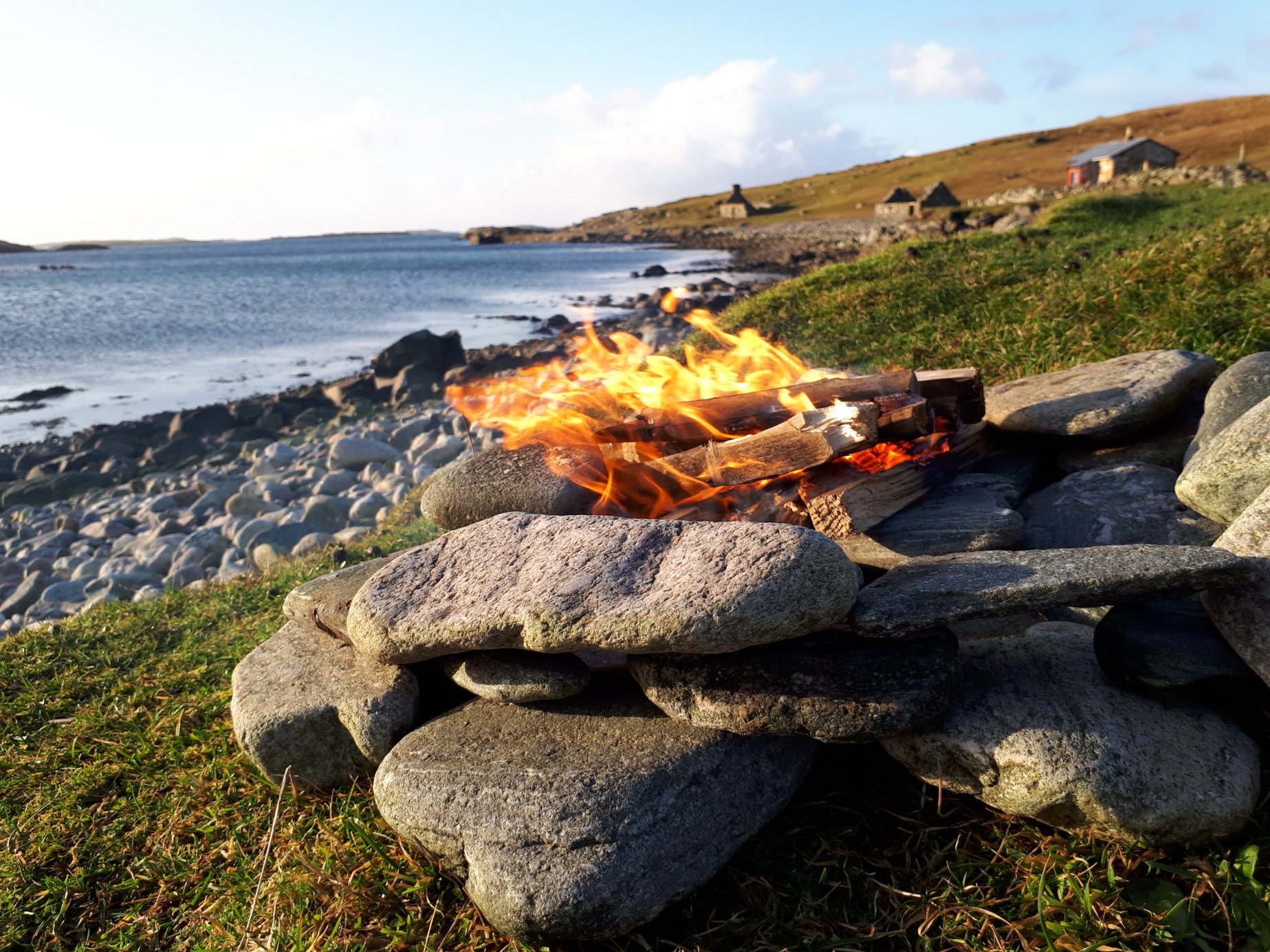
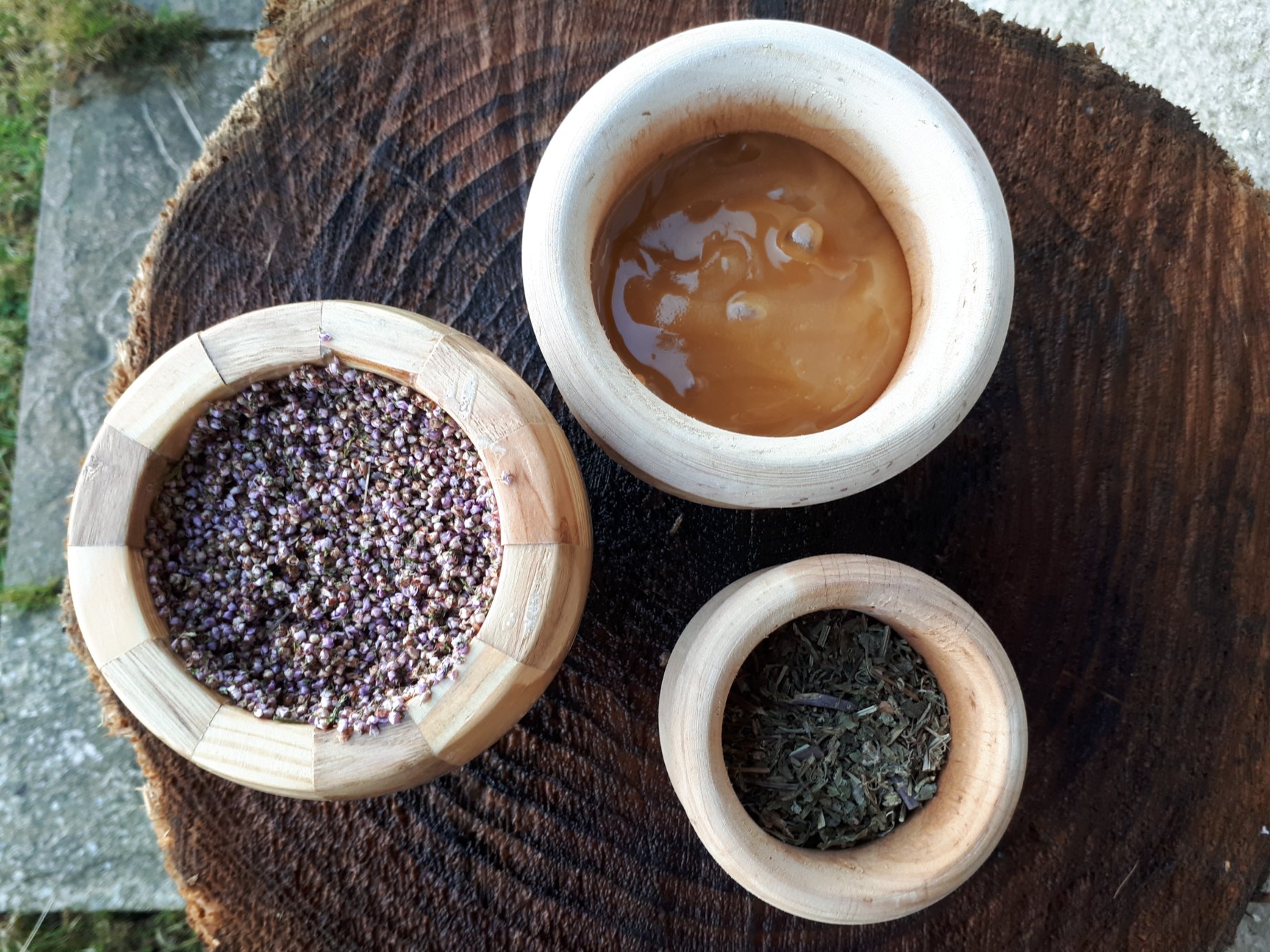
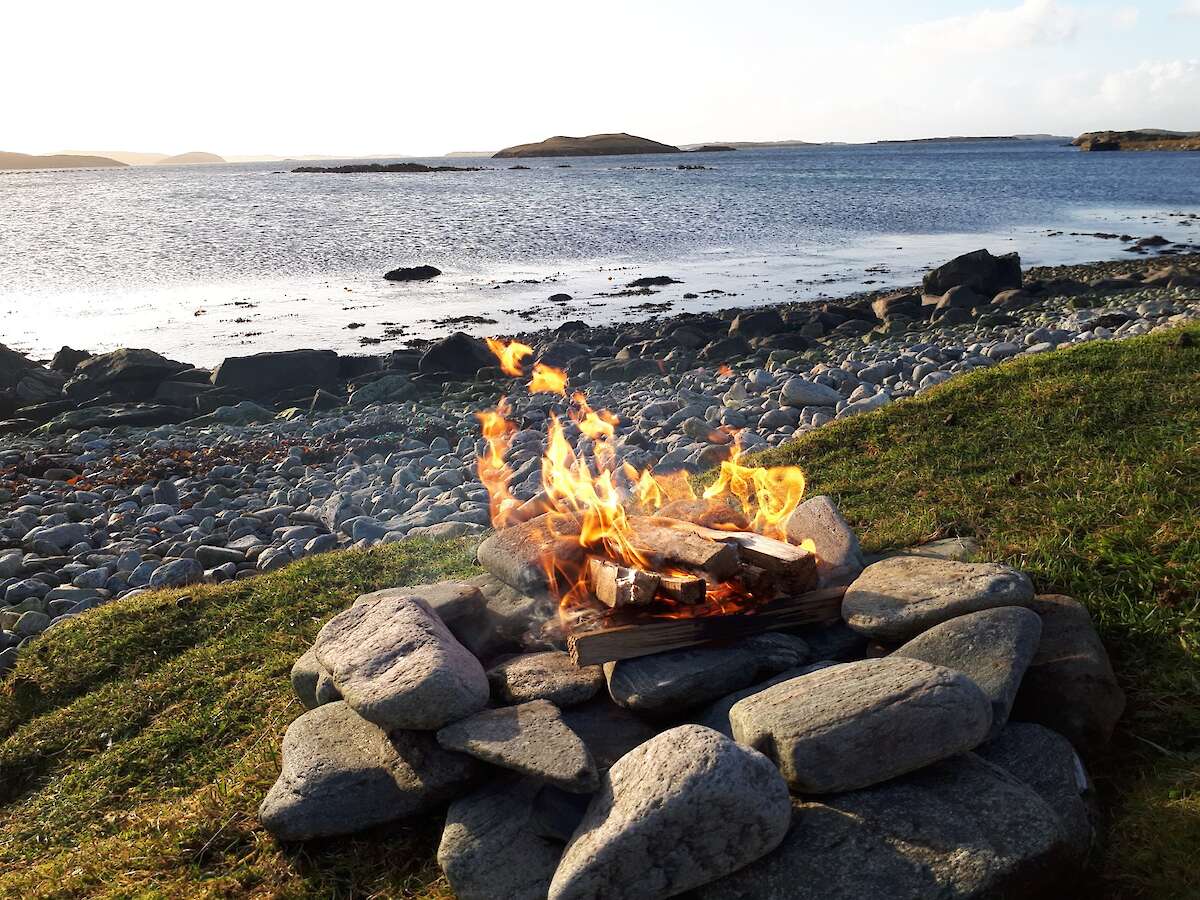
I start by filling a large metal pot with spring water from the well towards the north of the farm, which provides all our water. The metal pot is hung over a large wooden fire and brought to the boil, the fresh heather is added along with some young nettle leaves and some alehoof to add some bitterness. The pot is left uncovered and moved away from the flames slightly to allow a rolling boil for about an hour.

After the boil is complete, I take the pot off the heat and sift out the larger pieces of heather and nettles with a wooden spoon and allow the water to cool to a “blood warm” temperature. Now it is time to add the honey. Shetland’s climate means that there is currently not a great deal of honey produced locally however, in its warmer past, wild hives may have been more common or, given how long honey can keep for, it would not be surprising if the Vikings imported honey to the islands. I have sourced some raw heather honey from one of my beekeeping friends to use in the brew. Its quality is undeniable when compared to an off the shelf jar of clear runny honey. The heather honey is thick, with a rich sweet smell of heather. Emptying it into the pot is like scooping ice cream, and it takes several minutes of stirring to dissolve it into the water.

Next it is time to transfer the liquid to the fermenting vessel, which in this case is a small oak barrel. I place a fine meshed cloth over the barrel’s opening an pin it in place before slowly pouring the liquid through, straining off any of the small bits of heather and botanicals is it goes. I then rinse off the cloth and replace it over the opening of the barrel. Now it’s time to wait and hope that the yeast starts its magic.

Wild yeast is unpredicable so it is difficult to say how it will perform and what the end result will taste like, but sometimes that’s half the fun. Fortunately, after checking on it anxiously over the course of a couple of days, I can see and hear signs of fermentation. The cloth is removed and the barrel is sealed with an airlock. After a couple of weeks, the mead is transferred to another barrel and left to age for a few months.
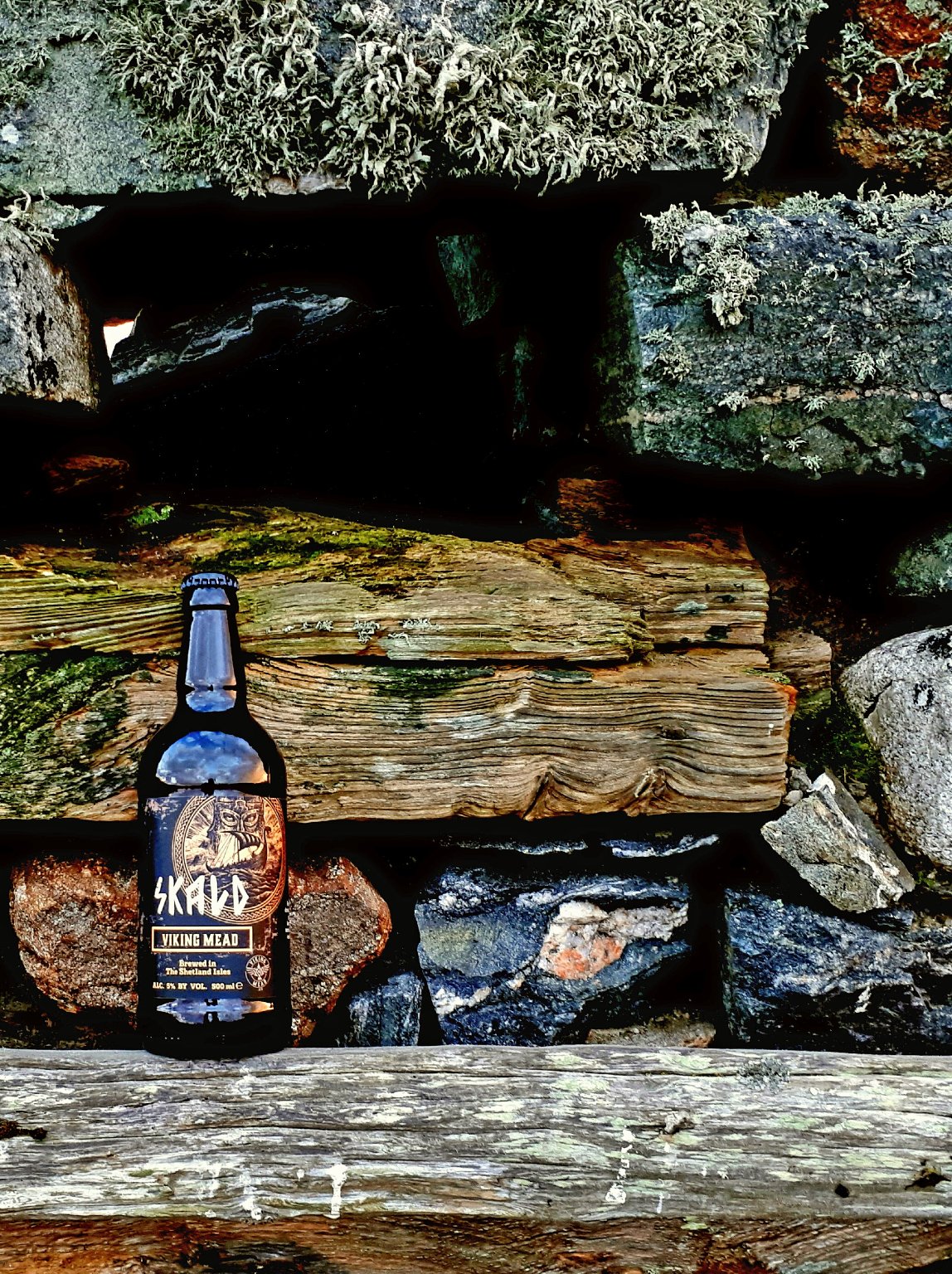
It’s now late November and the long winter nights have set in. It is dark by four o’clock in the afternoon and today there is a hard frost setting in. There is not a breath of wind and standing out on the decking at the front of the house it feels like the perfect night to start a small fire and ope the mead. Drawing the bench in closer to the fire to stay warm, I sit down and take in the balance of contrasing experience: the chill of the frosty air, the heat of the fire, the the dry wood smoke … and the sweet taste of mead.

Skol

Alistair Morgan is owner of Viking Mead Ltd, which he founded in 2017.

www.viking-mead.com
Facebook: Viking Mead Ltd

In Search of Aud the Deep-Minded

Shetland singer-songwriter, Claire White, follows in the footsteps of her Viking heroine

Aud the Deep-Minded. It’s a woman’s name. Yes, really. It captivated me too when I first heard it on the 1st of February 2015 at Sumburgh airport in Shetland.
I’d returned home from work in the city of Aberdeen to attend Up-Helly-Aa, Lerwick’s annual Viking-themed fire festival. My friend and I exchanged party stories in the departure lounge and the conversation turned to the inevitable gender debate. In Lerwick, women have never been guizers (masqueraders) in the festival’s c.150 year history, so I’d long wondered what part women played in Viking society. My friend said ‘You know about Aud the Deep-Minded, don’t you? She was a prominent female Viking.’ ‘Really?’ I asked as creative sparks danced in my mind. When stories of women’s history with a Shetland theme are gifted to me the urge to write a song is strong.

I wanted to know Aud and to understand how she earned her epithet.

My research journey began with visits to Norwegian and Estonian Viking exhibitions. Here I learned about the power of Viking women in the domestic sphere and about their capacity to predict and manipulate destiny.

On return to Scotland I read Scandinavian history books and Aud again surfaced as a poster girl for female Viking competence. She was born around 830 into a powerful Norwegian family who fled a tyrannical King and settled in the Scottish Hebrides. From here they raided Ireland where Aud was married off to the King of Dublin. Together they had a son, Thorstein the Red, who returned to the Hebrides with his mother when Aud was widowed. Here Thorstein learned the art of campaigning, conquering large parts of northern Scotland and fathering seven children before dying in battle.

Now Aud was a widowed, orphaned, grieving mother living in a treacherous country, but still she found strength to hatch an audacious escape plan. She commissioned the secret construction of a wooden ship in Caithness forest, crewing it with twenty family members, slaves and friends. They set sail for Iceland, first stopping in Orkney to marry a granddaughter to a Scottish Earl. A visit to Faroe followed where another granddaughter was married off to produce ‘noble kin’. On arriving at her final destination, Aud settled the Breidafjord area in western Iceland and gifted land to her crew. The process of strategically pairing her grandchildren continued until the wedding feast of her youngest grandchild c.900. That celebration was also to be Aud’s wake. She may have begun life as a power play pawn but she ended it as an independent, honourable and influential woman.

Distilling Aud’s formidable life story into a song was daunting but enjoyable.

The epic narrative was soon neatly packaged into six verses and a rousing chorus which were shared on social media towards the end of 2016. The digital gods then smiled on me as I was e-introduced to Icelandic writer, Vilborg Davíðsdóttir, who has penned three historical novels with Aud as protagonist. Vilborg checked the facts of my song, advised on pronunciation, and inspired me to learn more about our shared heroine. In passing, Vilborg mentioned a Reykjavik non-fiction writing conference planned for June 2017 and the creative sparks danced again. Here was my opportunity to see Aud’s Iceland for myself.

In Iceland, Aud’s name is pronounced Oythur Djupooyga.

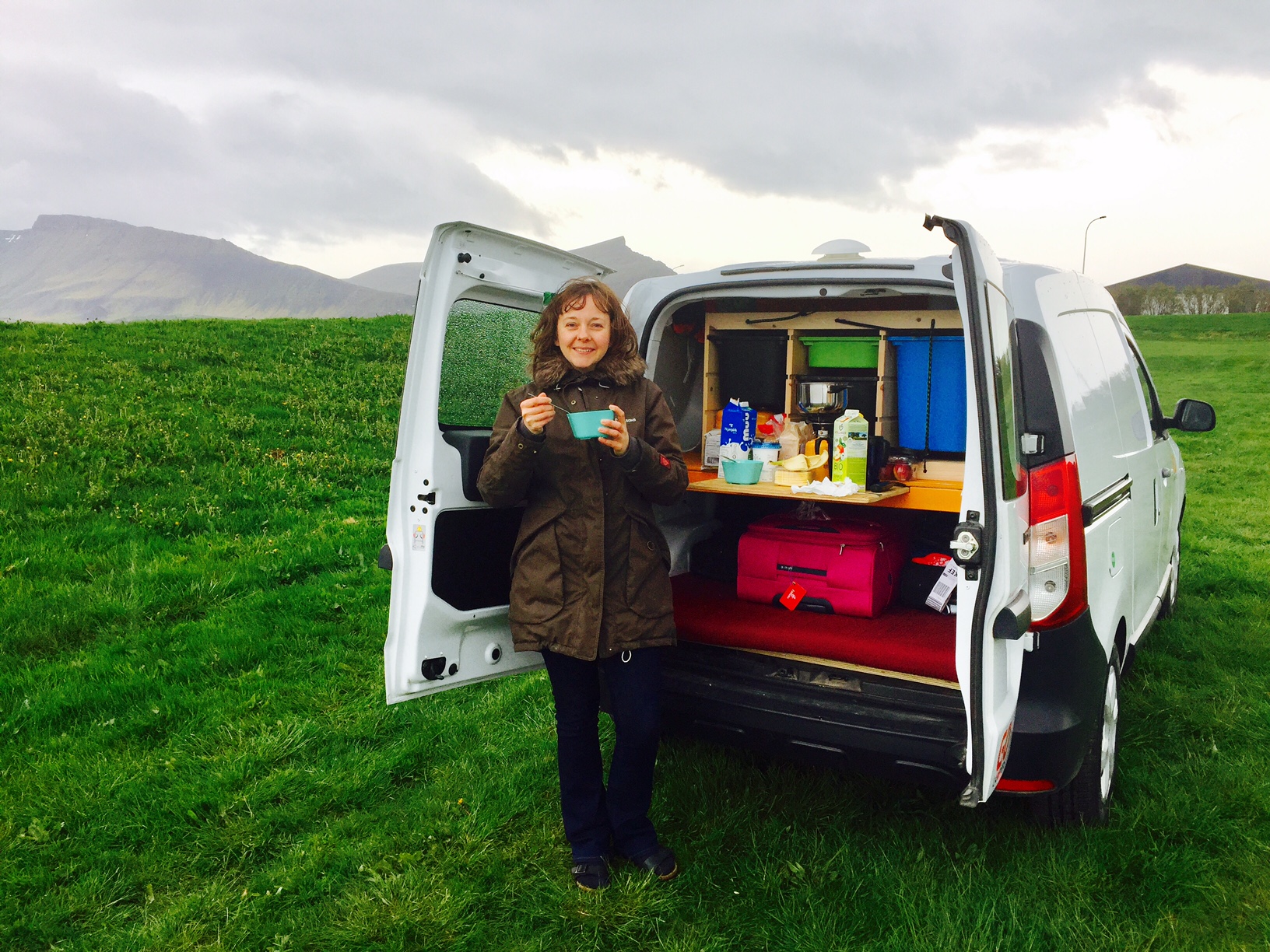
I discovered this when I explained the reason for my travels to a campsite attendant. I’d left Reykjavik bound for Iceland’s wild west in a tiny hired transit van, secretly wondering whether it was heavy enough to keep me grounded on gravel roads in notoriously high winds.

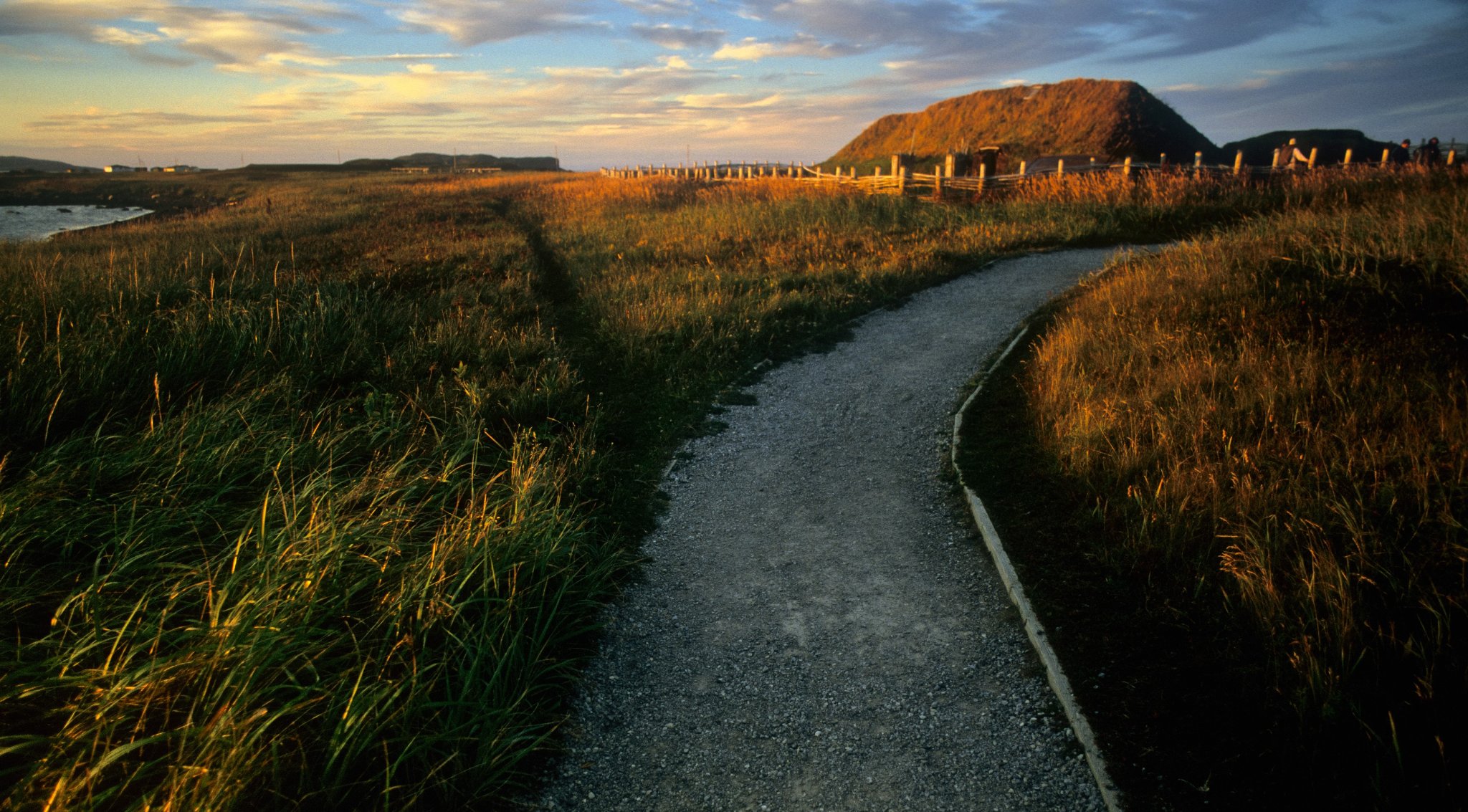
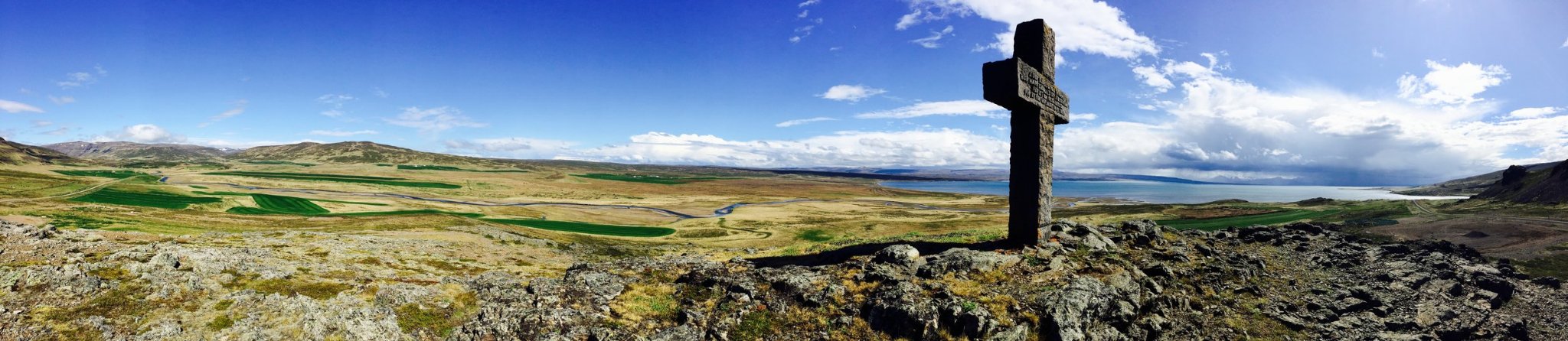
But miles of empty highway delivered me safely to Aud country, signposted by the Krosshólaborg stone cross memorial established by local women in 1965. This pointed the way to Hvammur where Aud lived and created her farm. It was clear why a wise woman chose this place in which to settle. Acres of green pasture were horseshoed by surrounding hills and the sea, creating a fertile oasis in an otherwise barren landscape.

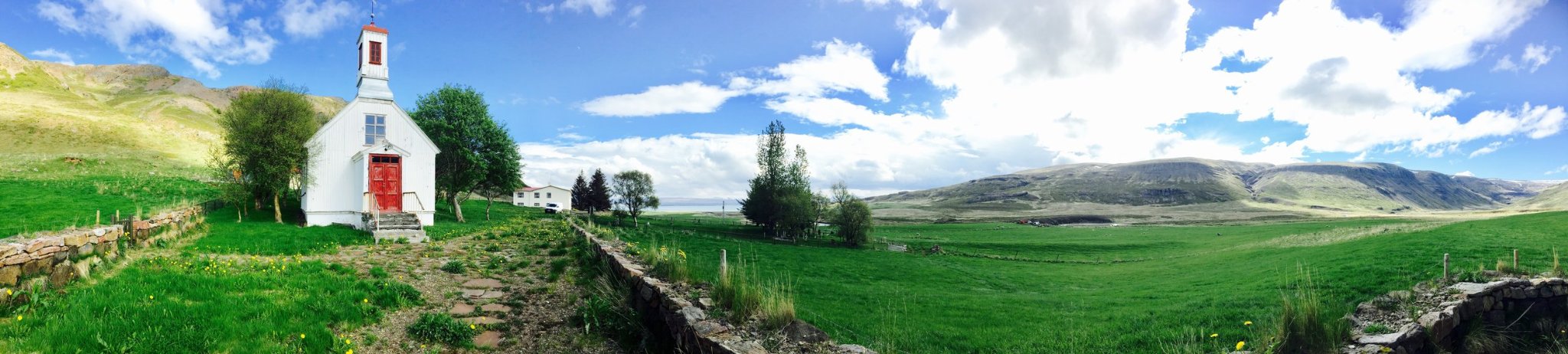
Nearby was Dagverdarnes where Aud and her crew ate breakfast. The long road into this secluded spot was barely passable, being bumpy, narrow and riddled with potholes. But every sump scrape was worth it for the beautiful view which awaited. A rarely-used church gave the promontory a focal point as it resounded with the richest birdsong I’d ever heard. Looking inland from where Aud’s boat may have come aground I could put myself in her shoes, transporting myself instantly back over one thousand years. There was no sign of a human hand on the landscape as I gazed up from my camper van supper and imagined Aud’s crew walking into the unknown.

Mission accomplished, I was left awestruck by the bravery of these ancient ancestors.

My journey through Aud’s world isn’t yet complete.

I’d like to trace her footprints in Faroe, Orkney and the Hebrides, to read the sagas in which she features, and to follow her lineage forward. Hopefully my song will reach others who are curious about Viking women, and perhaps new ears will now prick up at the mention of that curious name.

Song of Aud the Deep-Minded will feature on Claire White’s 2018 album: claireelizabethwhite.tumblr.com

Vikings on Set

By Alison Denvir

Today I woke up at 11:30am. Which is a far cry from the usual 5:30am start when I’m at work. The reason for the 5:30am start? To be dressed in costume and in the hair and makeup chairs by 6:15am of course. This is only on filming days obviously. On normal work days I’m up at 6:30am and at marine base for 8am.

What do you do? I hear you ask!!

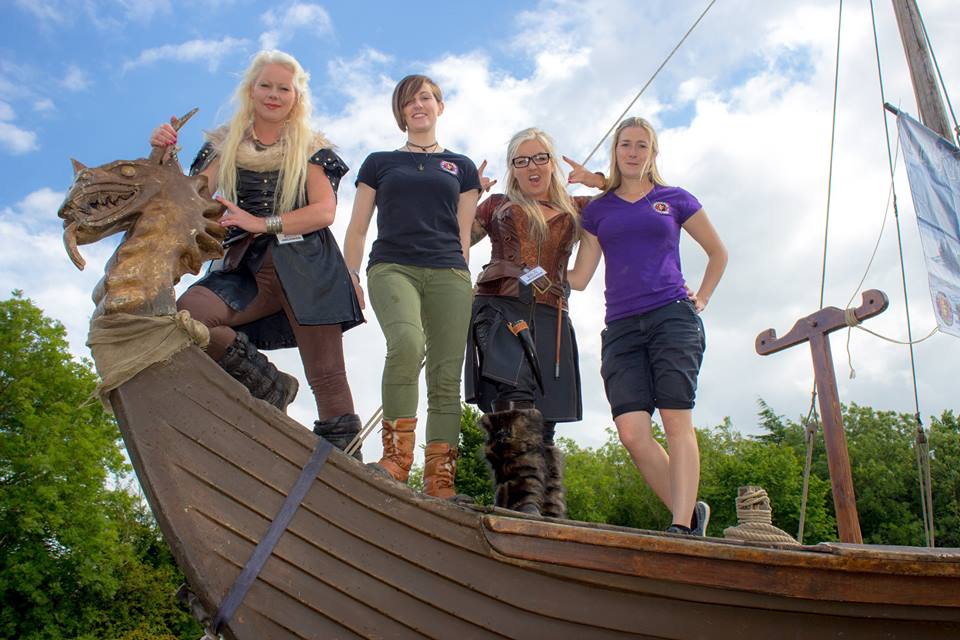
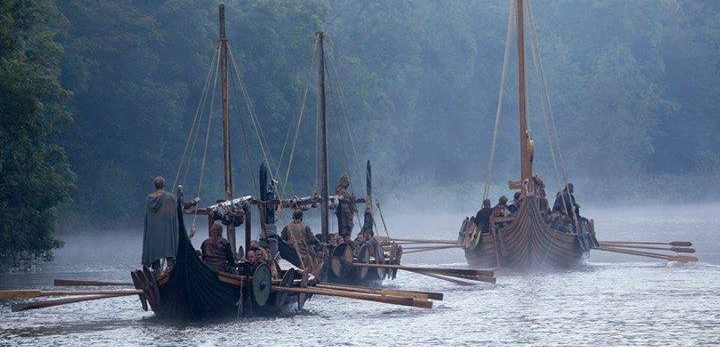
In my mind, I play on boats all day long, and I absolutely love it. In reality, and on paper, I’m marine crew on History Channel’s Vikings. And how did I get into that job?? I lucked out!! I’m a volunteer member of The Ardglass Vikings and we own several of the boats in the show. The production company sought us out to hire the boats and we come as a package deal.

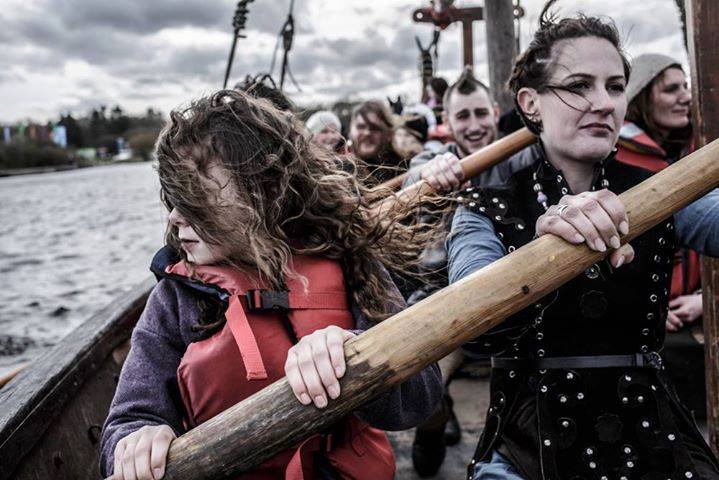
As marine crew we spend most of our days transporting boats from one set to another and craning them in and out of the water. Whether this be the pond at the studio or Blessington Lakes where even a passing wedding got in on the Vikings action getting some very unique photos for their album. The Ardglass section of the marine crew are the lucky ones! We get to be extras to crew and captain the boats. There are twelve boats in total this year for season 5. We usually only have six maximum out at any one time.

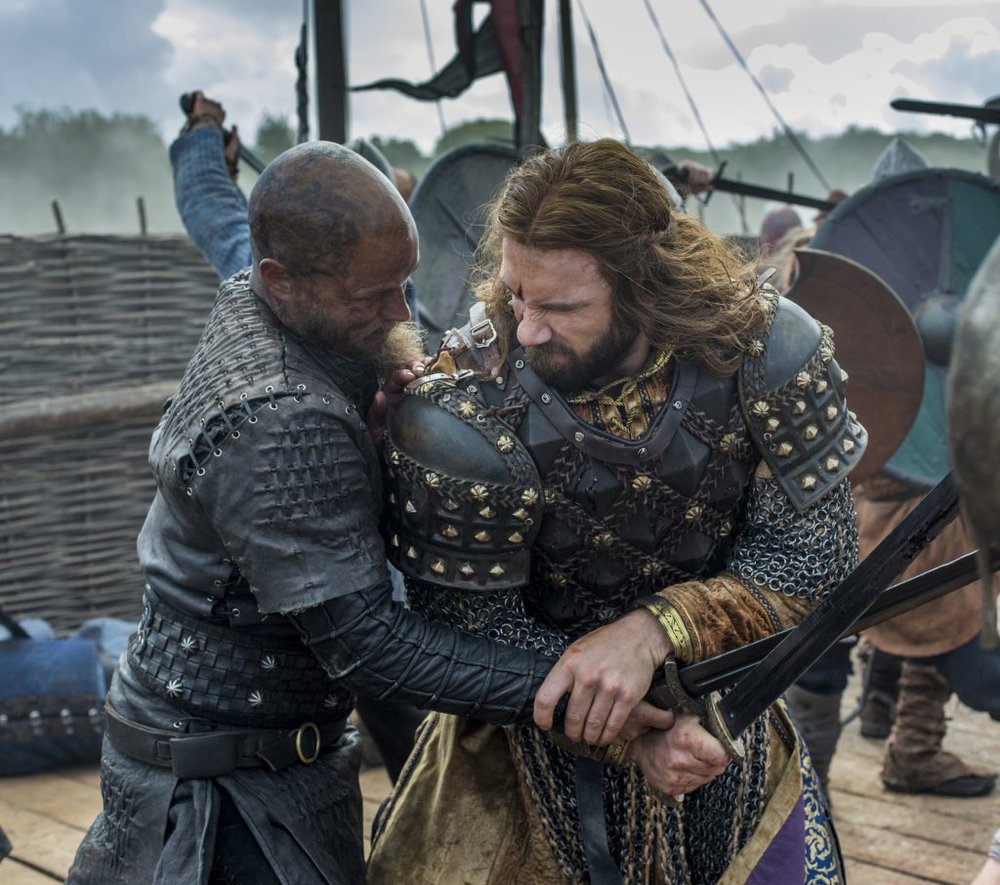
Ragnar v Rollo

Being extras of course means costumes!!

And what costumes we have. The females are all shield maidens whilst the men remain your average viking warrior. That being said, I can tell you I’ve been the only female marine crew, as yet, to play a male character. Twice. I played a young french male crew member on Rollo’s ship. I stand on his left hand side as we row into battle against Ragnar on his barge. Don’t worry, no spoilers here, all has been seen on screen already.

I’ve also been the only female to be dunked into a tank of freezing cold water with an all male crew, including Ragnar himself for a soon-to-be-seen episode. Four days of having freezing cold water dumped on us from above only to be tipped into the freezing water below resulted in four days of minor hypothermia. Lucky me eh?! But we no sooner got our heads above the water again and someone scooped us out to dry off and warm up before the next take. We had a cushy set up that day. Plenty of crew on hand to dry us with nice warm towels and then sit in a heated tent drinking hot soup and any amount of tea and coffee we wanted. And of course we always find our own ways to keep warm. The easiest is to fill a normal bottle of water with hot water from the tea station, hey presto instant hot water bottle. Stick it under your costume and it’ll last an hour at least.

Some filming days aren’t quite as busy and active as others.

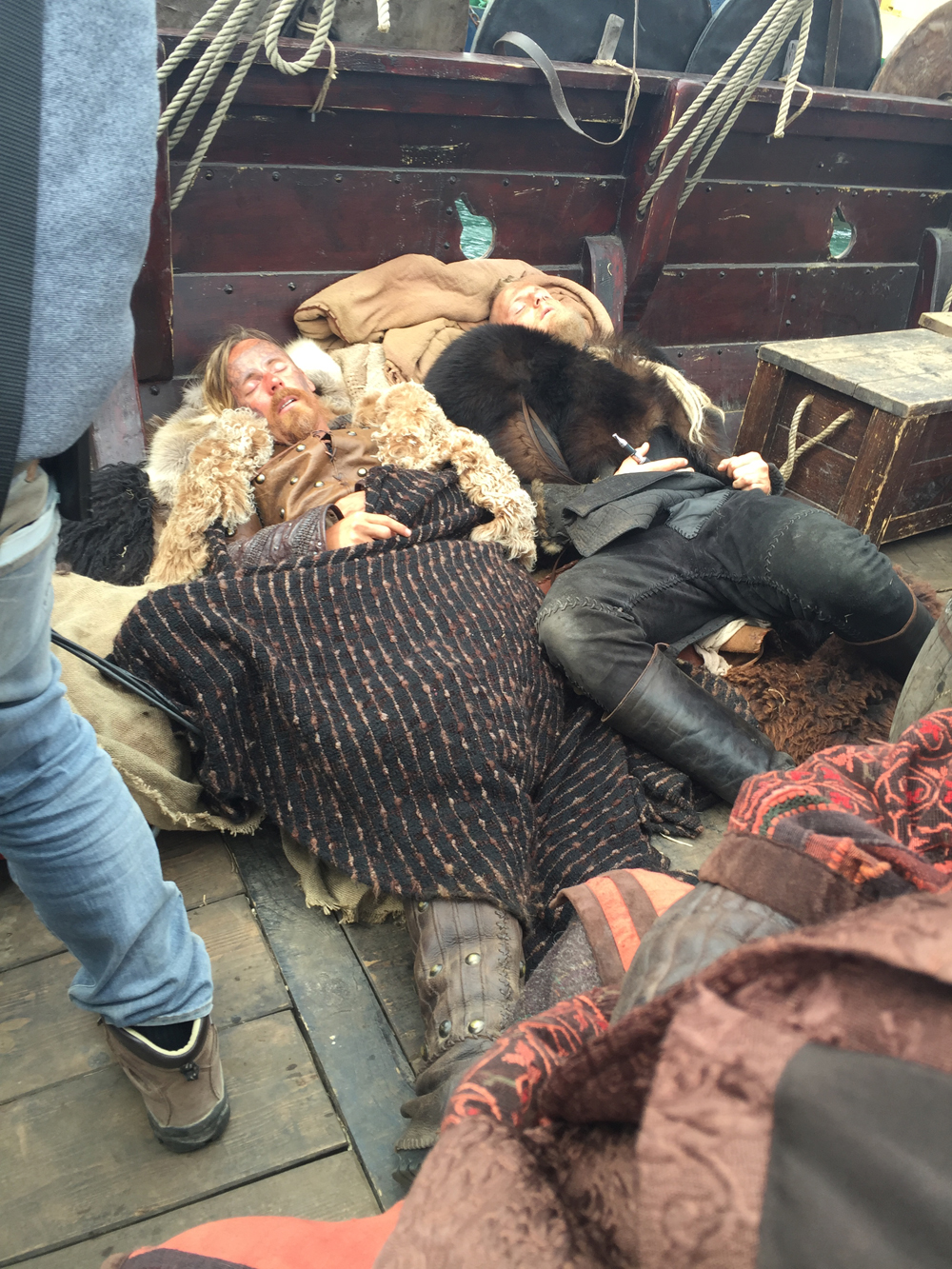
There are many spent with rowers and extras sleeping for hours while out on the water. Those are the days we dread!! Lunch is shuttled out boat by boat and isn’t always hot by the time it reaches you. Being crew means we don’t get to sleep like the rowers. When the call comes we must get the boat into position immediately, even if you’ve only managed one mouthful of food so far. Some days we spend ten hours on the water constantly repositioning. Even toilet breaks are a group effort. A call is sent out requesting a toilet boat to come pick up crew, if you’re nearing a take then you could be waiting another hour before the toilet boat comes. But the best words to hear on those days undoubtedly are “That’s a wrap”. Even if you don’t hear the actual words, the cheers and clapping by all the rowers and extras let you know the filming day is over.

Notice I said filming day and not work day. As marine crew we are often the first on set and the last to leave on filming days. Once wrap is called we have to take the boats back to the dock and tie the up for the night. Some locations have strong currents and waves that could cause the boats to bash into each other and the dock. We make sure the boats are securely tied up with lots of fenders to prevent damage. It’s usually a five to ten minute trip back to the dock so this is spent clearing the boats of rubbish, and by rubbish I mean water bottles. They are the bane or our existence as marine crew.

Who knew 20 people could drink so much water in one day?!

Once all that is done, it’s back to costume to become a normal person again. Some days that signals home time, other days it’s back to the dock to pump water out of the boats.

Mostly it’s just rain water or splash from the days activities, but on occasion it can mean a leaky boat. Cue the panic! Can you see the leak? Is it bad? Can it be filled with filler? Does the boat need lifted out of the water? Will the boat be ready for the next filming day? It’s not often major repair work needs done on the boats. Sure we’ve had bits come off in the middle of a take, for ‘bits’ read ‘tiller bracket,’ but we always get them fixed and we’ve not missed a filming deadline yet. It’s all part of the job as marine crew and I wouldn’t have it any other way.

Sixteen months ago I was a retail store manager running a mini empire of discount goods and 23 staff spending 40+ hours a week indoors and unfulfilled. Now I spend my days out in Ireland’s elements with a family of boat loving nutters, getting paid to do something I love. I for sure never thought that would happen to me.

Right, I’m off to watch myself and my friends on tv now, if I can spot myself that is.

I have what I like to call ‘Clarke Kent syndrome’ I look nothing like myself when my hair’s pulled back from my face and i’m wearing contact lenses. It’s a handy disguise to have when most of your friends are big fans of the show. Make sure you give Ardglass Vikings a follow on Facebook. We travel all over Ireland with our now famous replica Viking longships raising money for charities from Guide Dogs for the blind to Marie Curie. Ragnar himself has even shown up to an event, he even brought Bjorn with him. Where possible we allow the general public to row themselves, you may even sit in Ragnar’s spot!!

Haggis or Baggi?


In Scotland and around the world the 25th of January celebrates the life and poetry of the famous Scottish poet Robert Burns. Burns Night (Scots: Burns Nicht) suppers are traditionally accompanied with Scotland’s national dish ‘Haggis’.

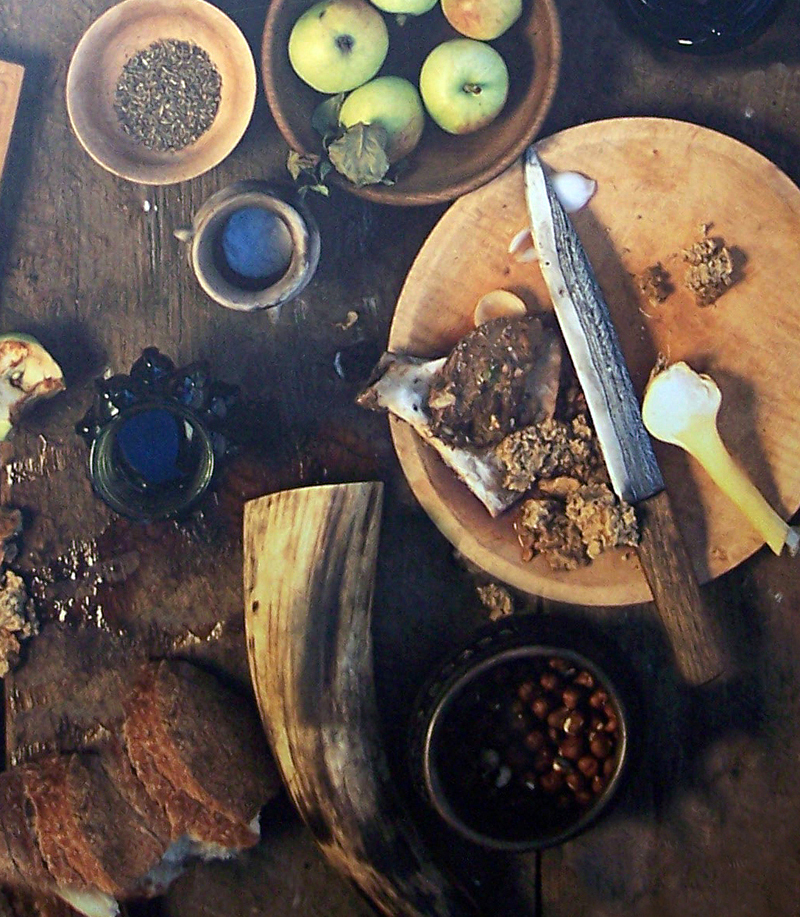
You may ask yourself what does this have to do with the Vikings? Well the word Haggis actually derives from the Norse word ‘Baggi’ meaning bag or parcel. The dish may have been brought over to Scotland by the Vikings who colonised Orkney, Shetland and large parts of the North and West. Indeed it is almost identical to the Scandinavian dish ‘Lungmos’ – except there is more barley in the haggis. With this in mind we contacted the Viking age farmstead of Gunnes gård in Sweden and asked them if they could create a ‘Baggi’ dish in the way our ancestors may have done over a millennium ago.

Not just another day at the farm.

By Gun Bjurberg

Today is not just any day. Finally the late fall is here and the slaughter is all done. Fine salted hams are now hanging, drying and slowly smoked over the fire. Bowels are turned inside out and washed for sausage making. Every little piece of the sheep is taken care of. We’re making flutes from the leg-bones later this winter you know. And what’s more, the neighbouring farm even slaughtered a cow the other day and we traded some grain with them to get a piece of it.

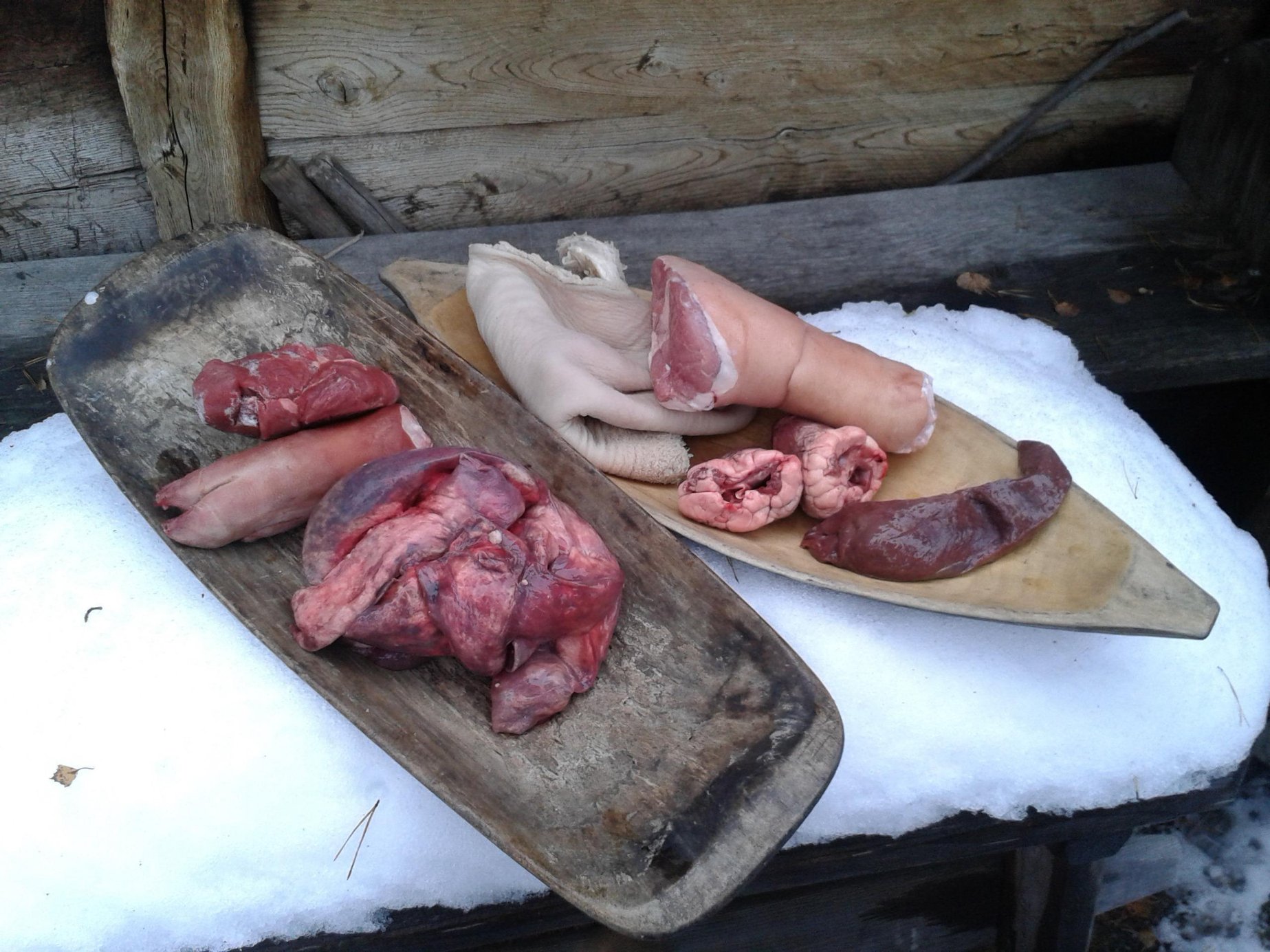
But all that’s not for eating now. O no, we’ll have to wait for Yule for that and most of it is going to be stored so we make it through the winter. But we do have the next best thing, an abundance of offal. It’s the perfect time for one of our favourite dishes ‘Lungmos’ which literally translates into mashed lunges. You might have heard it being called Pölsa as well. This dish would certainly have been carried around by the Vikings in a sheep or deer stomach lining, much like Haggis.

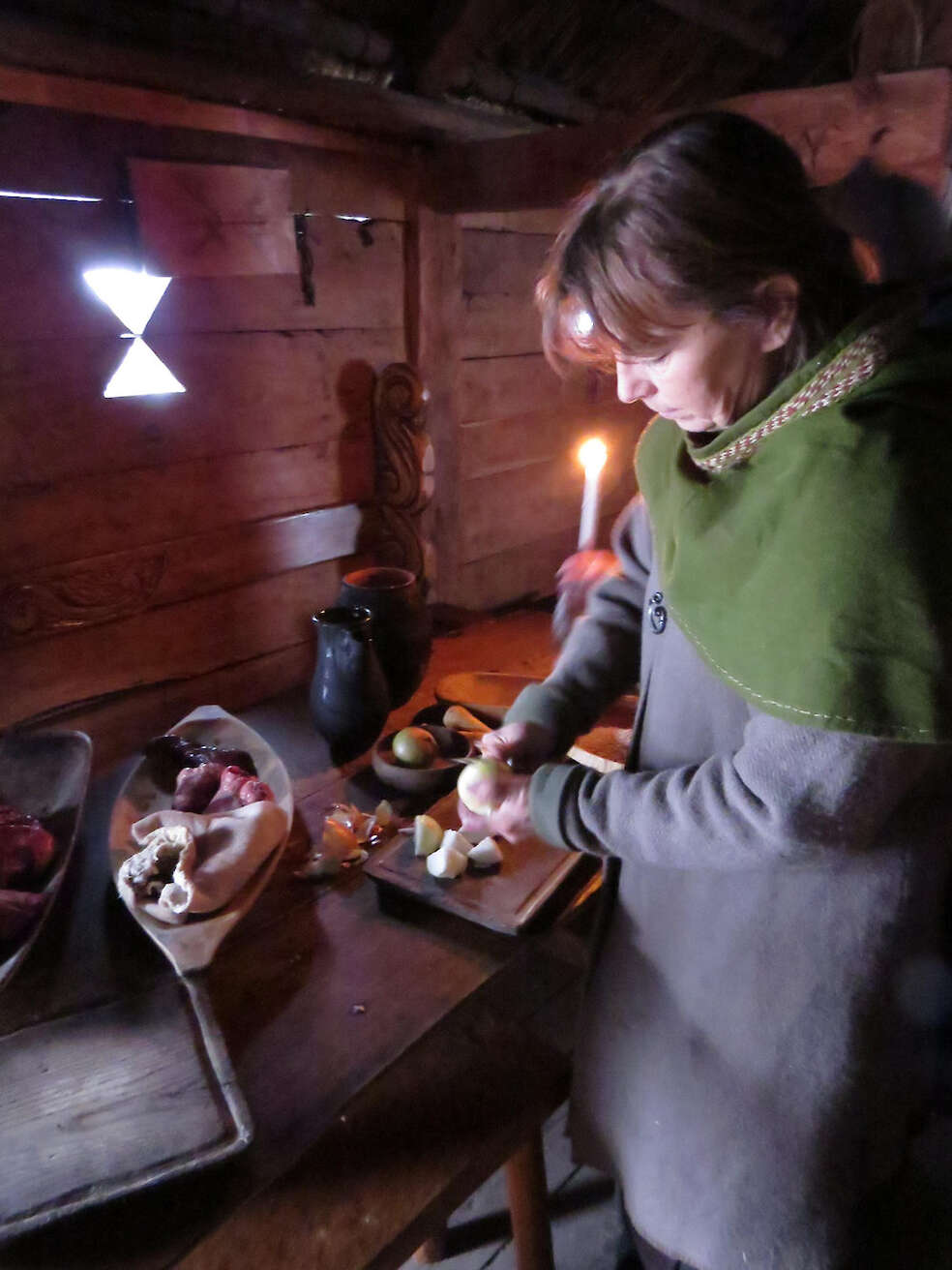
Making the Lungmos ‘Baggi’

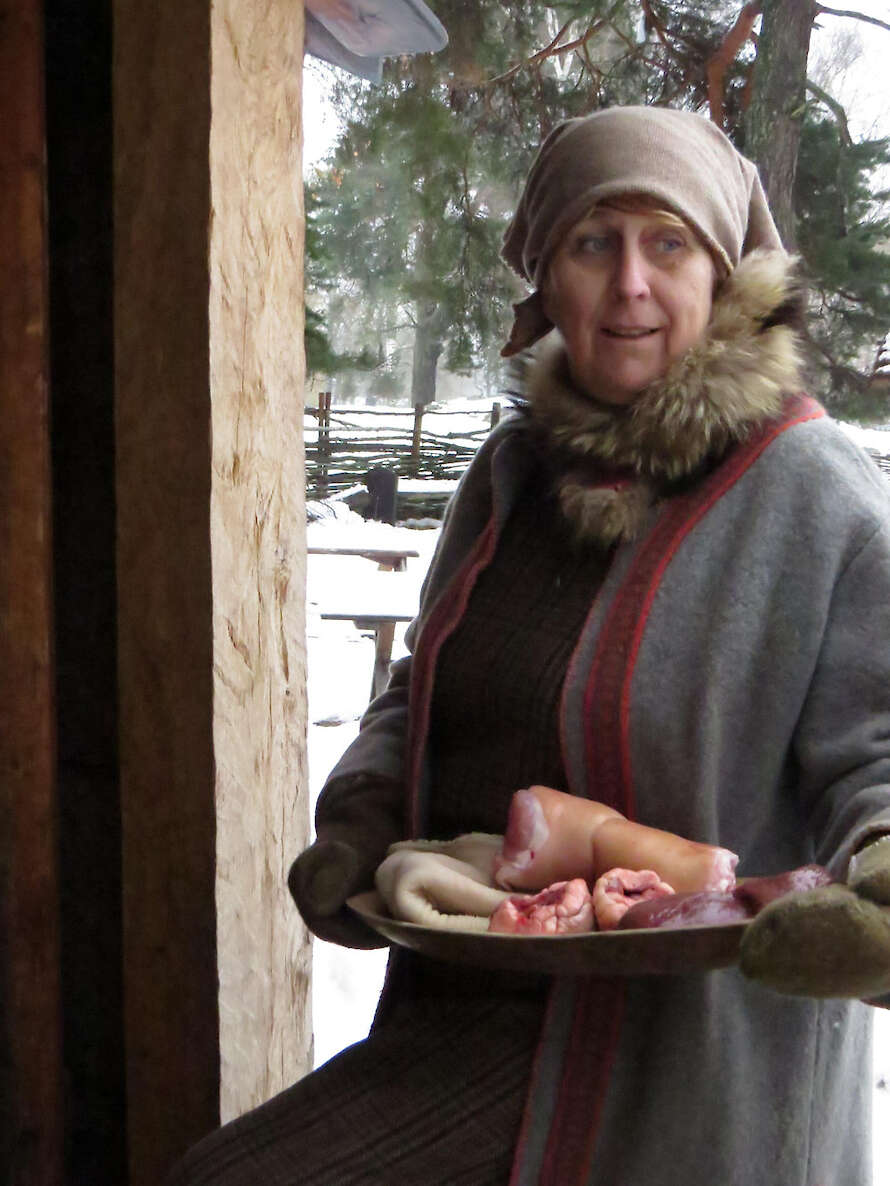
Early in the morning we started a fire in the kitchen house. It’s not every day that we use that house during the cold and dark winter, but for a big day like this we need the space and the utensils of the full kitchen. On the wooden worktop are the cow lungs, stomach and liver, sheep heart, pigs feett and salted leg, leftovers from a hunted rain deer, and some scrap meat from the slaughter. We also have barley, onions and parsnips. For seasoning we have some thyme from the garden and juniper berries from the forest around the farm.

Now here’s a tip for all of you when you are preparing lungs. It’s easier to cut the lungs if you first give them a short boil. Just make sure you keep them submerged as they tend to float when the bubbles in them expand. After the short boil, trim away the windpipe and cut it into smaller pieces.

Trim the fat and the membranes from the liver and cut it into pieces. With the rest of the meat and the cow stomach, just cut it into smaller pieces to cut down on the cooking time. I don’t want to chop any more wood than necessary, do you?

It’s time for the vegetables. Finely chopped parsnips and onions give you a good broth to cook the meat in. Put the meat in and make sure to have the pot boiling. Now is the time to chop some more wood if you didn’t do it this morning, because this is going to take a while (or just have a snow ball fight as we did).

When you have a nice pile of finely chopped wood, the meat should be cooked. Use the meat hook to take out all the nice pieces of meat. Scrape the last of the reindeer from the bone and cut all the rest of the meat as finely as you can.

In the mean time you can start boiling the barley. Make sure to season the broth with the Thyme and the crushed Juniper berries and then pour the barley in the big pot. If you are wealthy and did not use all the salt on preserving meats, then go ahead, use some now. Just don’t overdo it just because you can!

When the barley is cooked into a thick porridge, add the finely chopped meat again and it is done! Fill a big bowl and call in your family and friends, it’s time to eat. Did you bring your spoon? Take the leftovers if there are any, wait for it to cool down and then put it in the sheep or deer stomach lining. Now your ‘Baggi’ is ready to take with you on a voyage of discovery and adventure.

A big thank you!!! To Tona, Eir and Grim (aka Gun, Anna-Cari and Anders) from Vikingagården Gunnes gård farmstead, Upplands Väsby community, Sweden for recreating this delicious Viking age recipe.

Ingredients

  • 1 x cow’s lung
  • 1 x liver from a calf
  • 2 x lamb’s hearts
  • 2 x pig’s feet/trotters, 1 salted pig leg
  • 1 x piece of cow stomach, as much meat you can spare
  • 5 x onions
  • 5 x parsnips
  • 2 x bushels of barley
  • 10 x juniper berries and a bundle of thyme
  • 1 x sheep or deer’s stomach lining